
Cultivating an Eye
Through spaces I've designed, gardens I've cultivated, gatherings I've created and beautiful things I've noticed along the way, we'll explore what makes something beautiful—and how to make those ideas your own.
Beauty is often found in the details. Cultivating an eye means learning to notice them—to understand why something works, recognize the choices that create a feeling, and discover how thoughtful changes can transform the everyday.
Look for the Connections
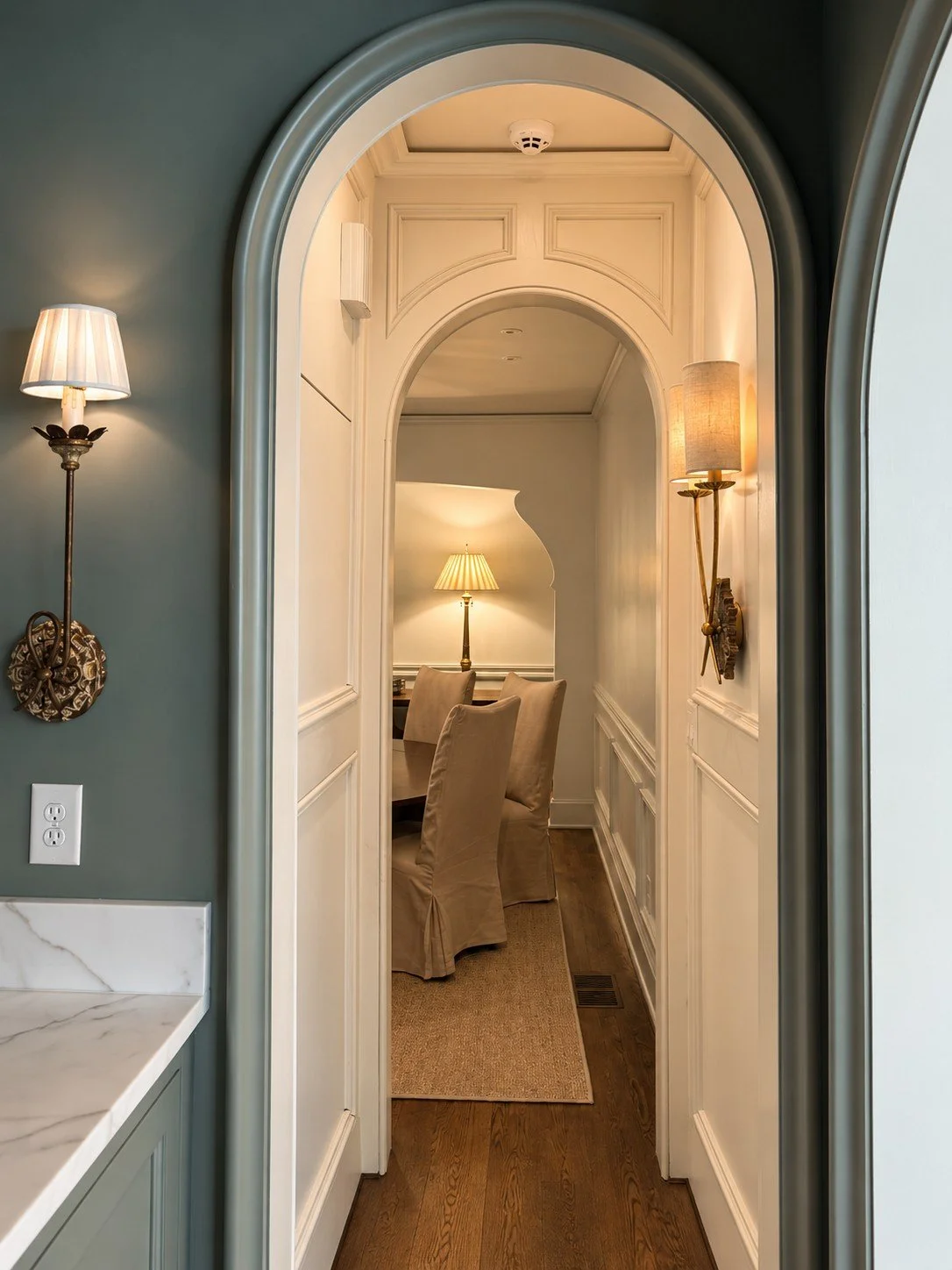
Your eye follows a path.
One arch leads to another, drawing you through the space and giving you a glimpse of what comes next.
Repetition creates connection.
The arches aren't identical, but repeating the shape makes the spaces feel as though they belong together.
Think about the spaces in between.
Passages and transitions aren't just ways to get from one room to another. They can create beautiful moments along the way.
Light changes the experience.
Moving from darker to lighter spaces creates depth and helps the view unfold as you move through it.
Make it your own.
Look through a doorway or passage in your own home. Where does your eye land? Is there something you could change to make the journey—or the view at the end—more beautiful?
Find the Thread
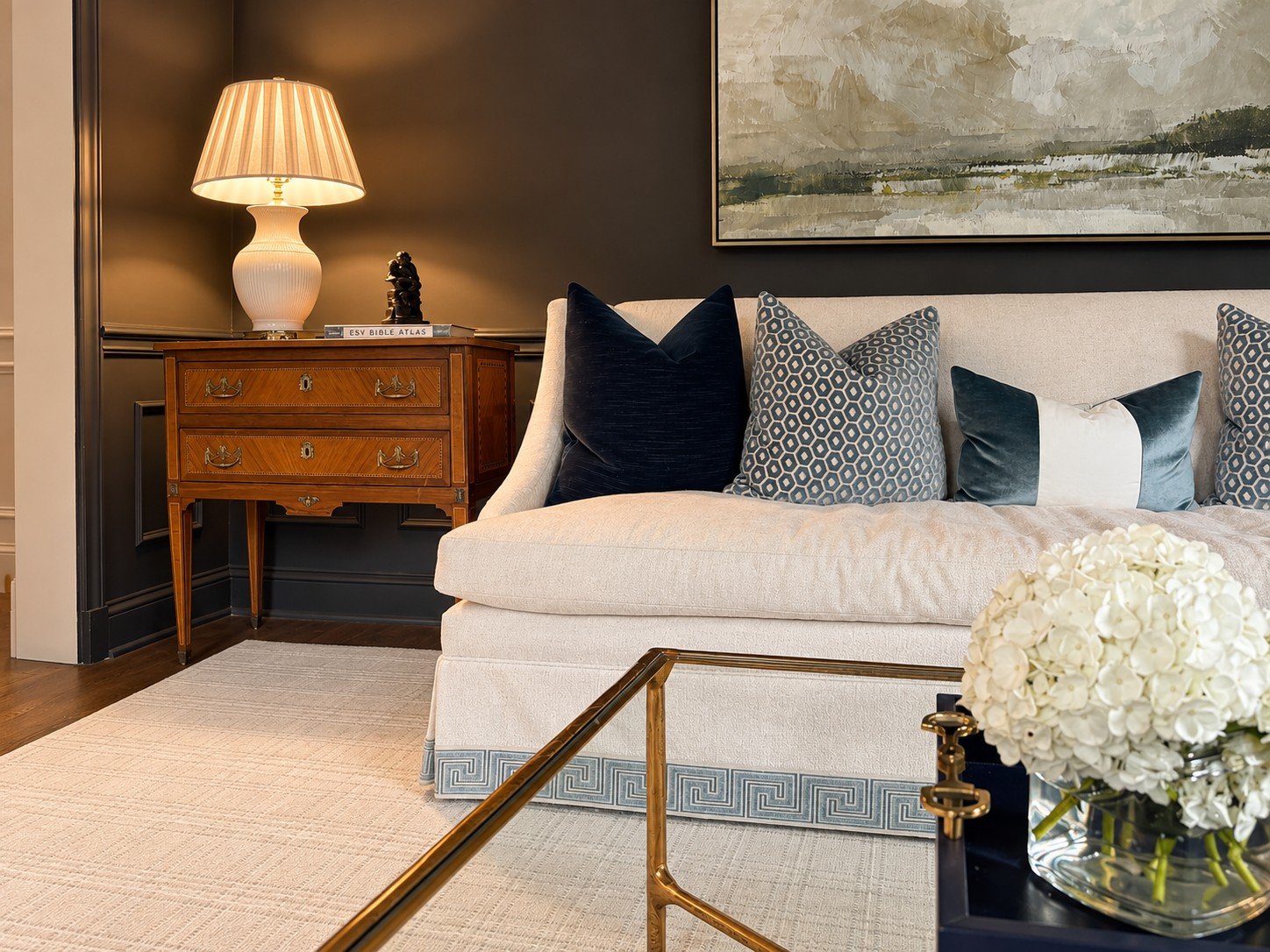
Contrast gives the room definition.
The dark color-drenching creates a cocoon-like backdrop that allows the lighter sofa, artwork and lamps to stand out.
Repeat, rather than match.
Blue appears in different shades and patterns—from the walls to the pillows and the trim—creating connection without matching.
Mix different histories.
An antique chest beside a newer sofa gives the room character and keeps it from feeling as though everything arrived at once.
Let the details create a feeling.
Individually, the linen pleated shade, brass, textured sofa, patterned trim, pillow fabrics and flowers are small details. Together, they create richness and personality.
Make it your own.
Look around a room you love. What colors, materials or shapes repeat? Is there a connecting thread—or could you create one? Where could you mix materials, patterns or textures to add interest?
Create a Moment
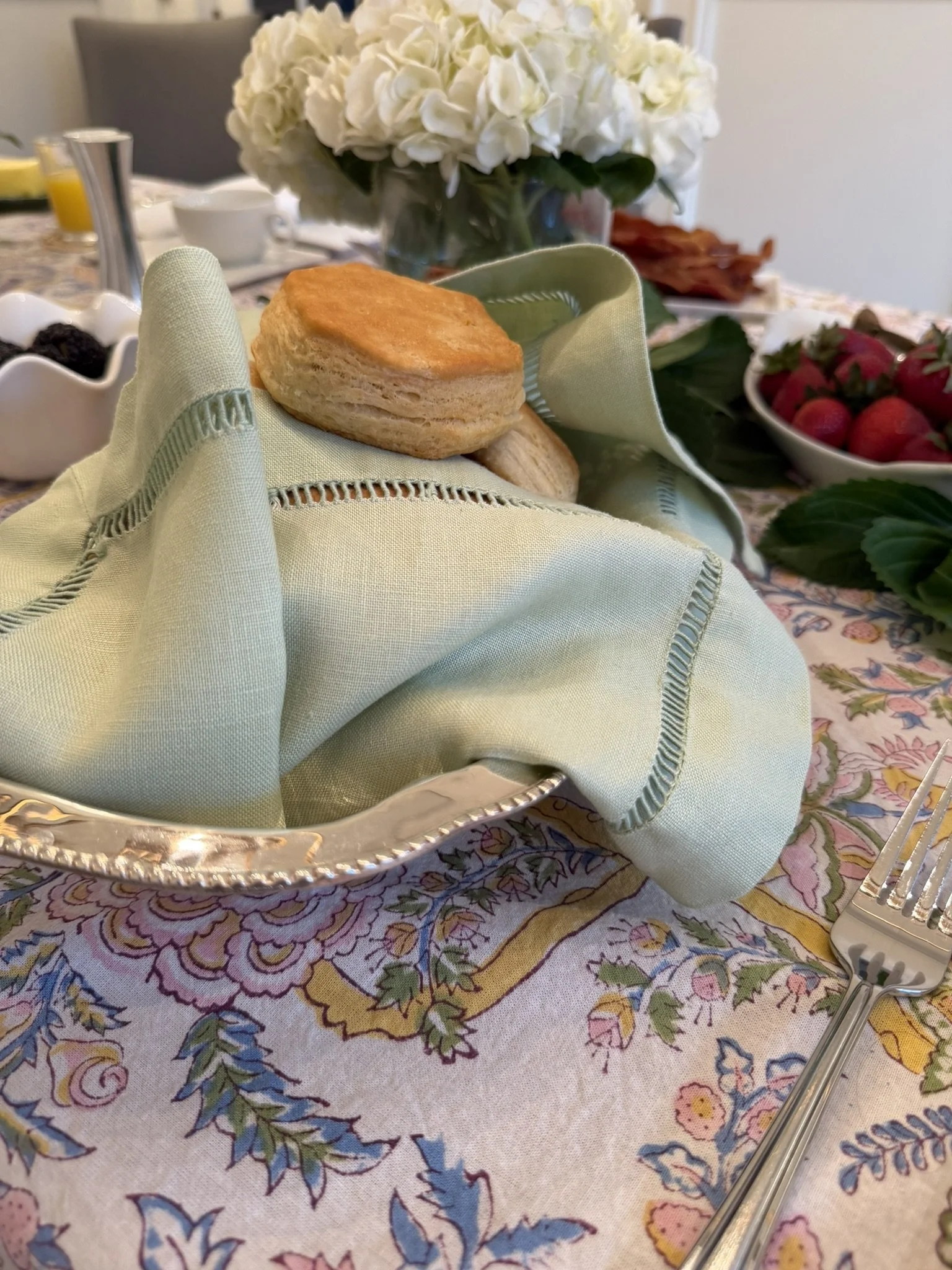
Start with the ordinary.
Breakfast for dinner can feel special with a little care—turning an everyday meal into something worth sharing.
Layer what you already have.
Patterned cloth, linen, silver and everyday dishes create interest through color, texture and contrast.
Let one detail feel unexpected.
Canned biscuits served in a silver dish turn something familiar into something a little more memorable.
Add something living.
Flowers and fruit bring color, abundance and a sense of occasion—even when there isn't one.
Make it your own.
Choose one ordinary moment this week and give it a little more care. What could you use, arrange or serve differently to make it feel special?
Create a Sense of Enclosure
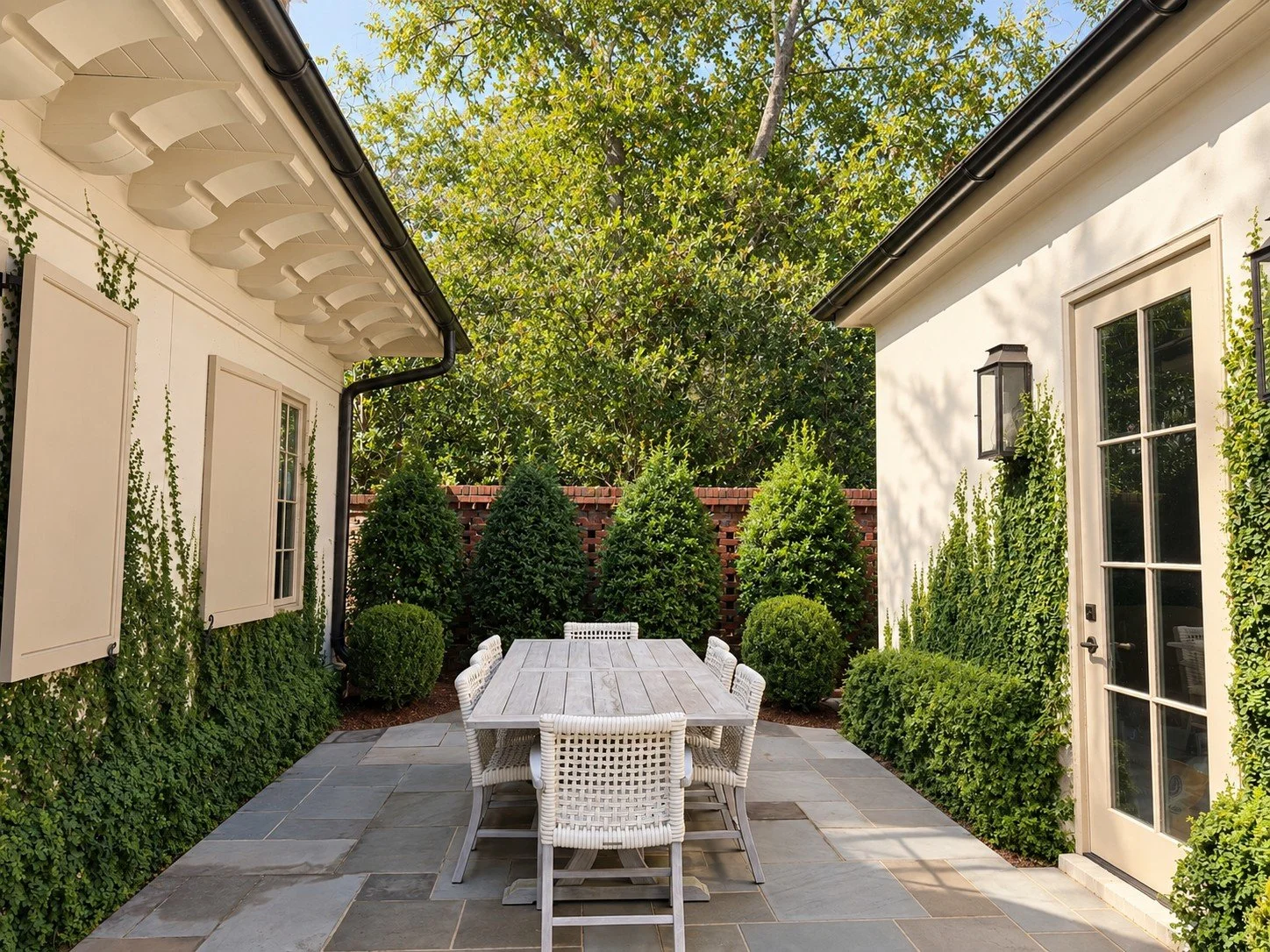
Give a small “leftover” space a purpose.
The small space between the poolhouse and garage created an opportunity to make an intimate outdoor room for meals and conversation.
Let nature soften the architecture.
Creeping fig, clipped greenery and the trees beyond soften the architecture and help create a cocoon-like feeling.
Layer plants to complete the room.
Hedges and boxwood close the view at the far end, creating privacy and making the dining area feel protected rather than exposed.
Use lighting to extend the feeling.
Aging copper lanterns and small twinkle lights tucked into the shrubs allow the space to take on a different mood in the evening.
Make it your own.
Consider the layout of your outdoor space and look for opportunities to create smaller rooms—do you have the beginnings of enclosure—a wall, hedge, fence, tree canopy or even the side of a house? What could you add to make it feel more like a place you want to stay?