
Artful Approach
A Thoughtfully Designed Garden
A beautiful garden is more than a collection of plants. What began as an open backyard became a series of outdoor rooms, each with its own purpose and feeling, yet designed to belong together. It's the relationship between them—the structure that gives each space definition, the repetition that creates rhythm, and the layers that bring softness and abundance—that makes the garden feel whole.
The Vision
The goal was to transform an open backyard into a series of beautiful, hardworking outdoor spaces—places to gather, entertain and relax throughout the year.
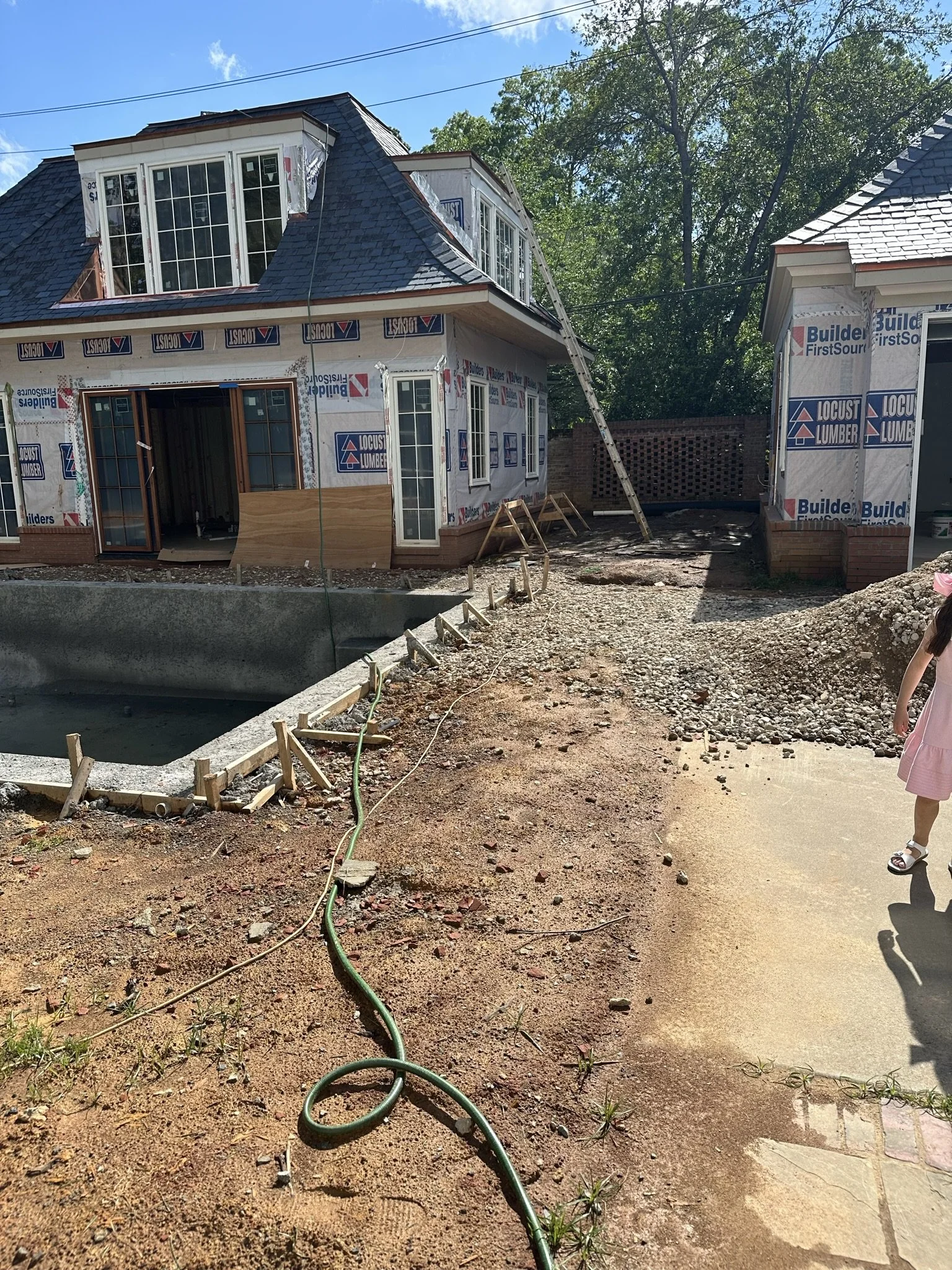
Starting with the practical needs—a poolhouse, garage and outdoor living areas—we organized the property into distinct but connected outdoor rooms, each with its own purpose.
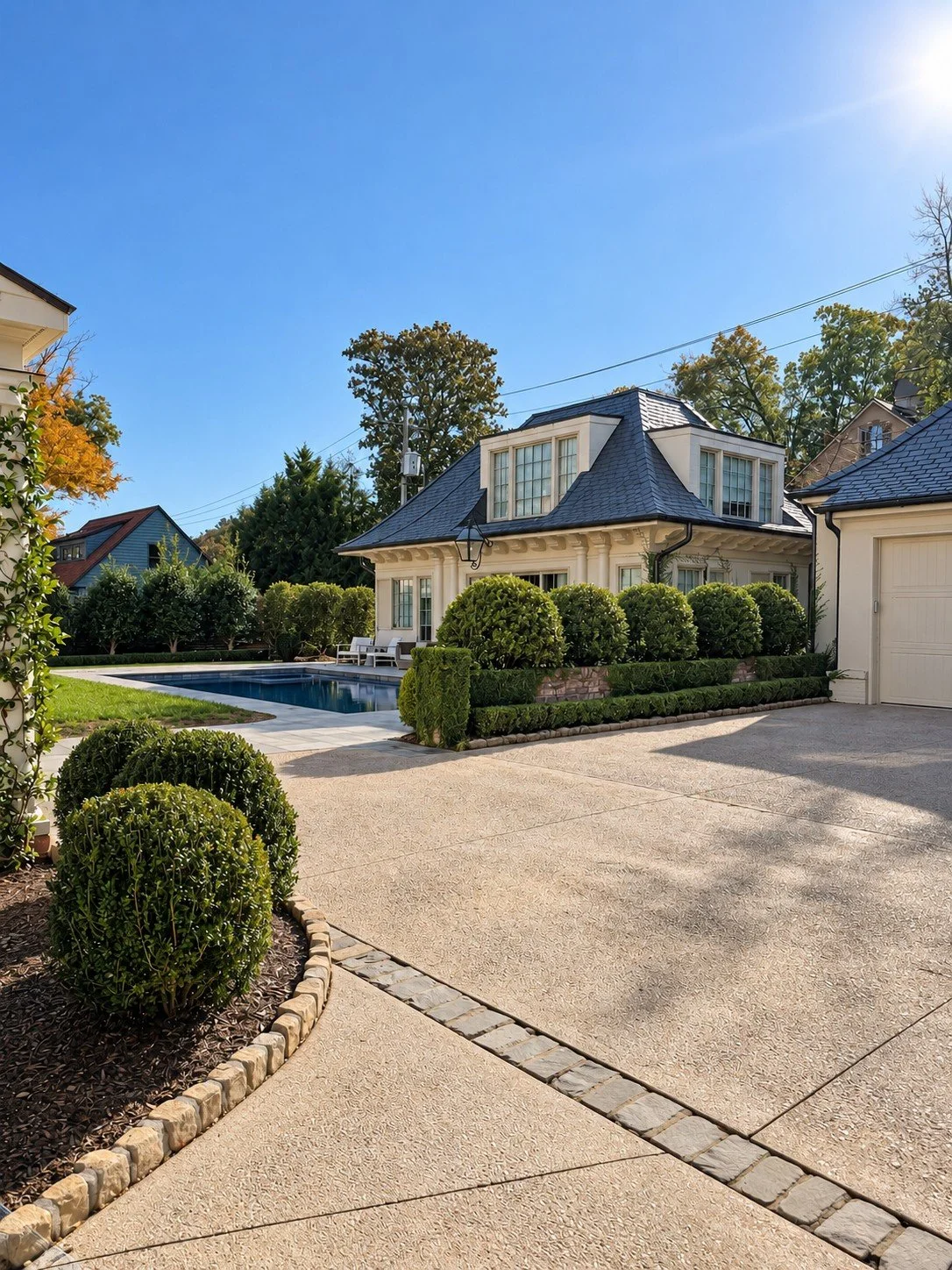
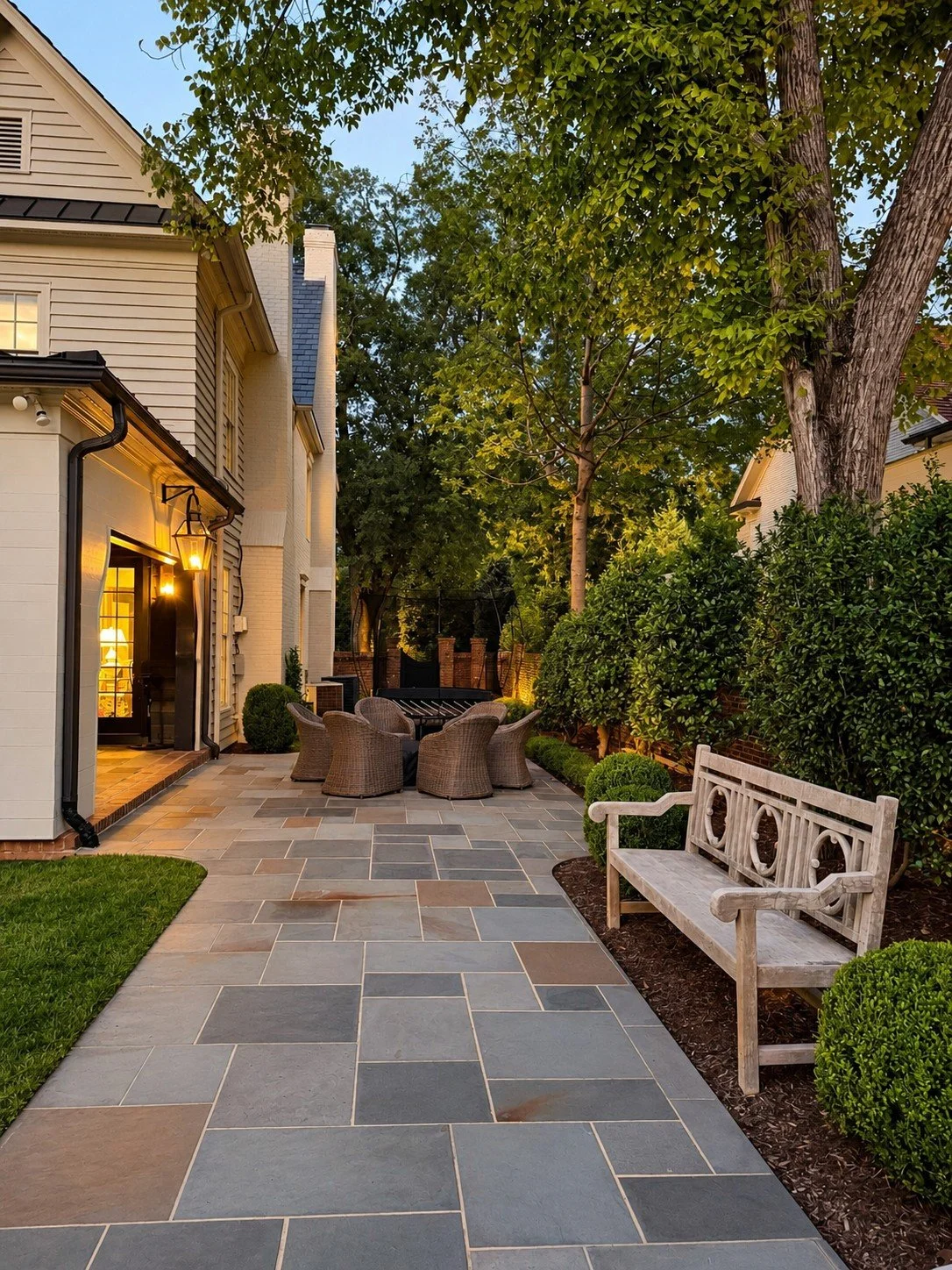
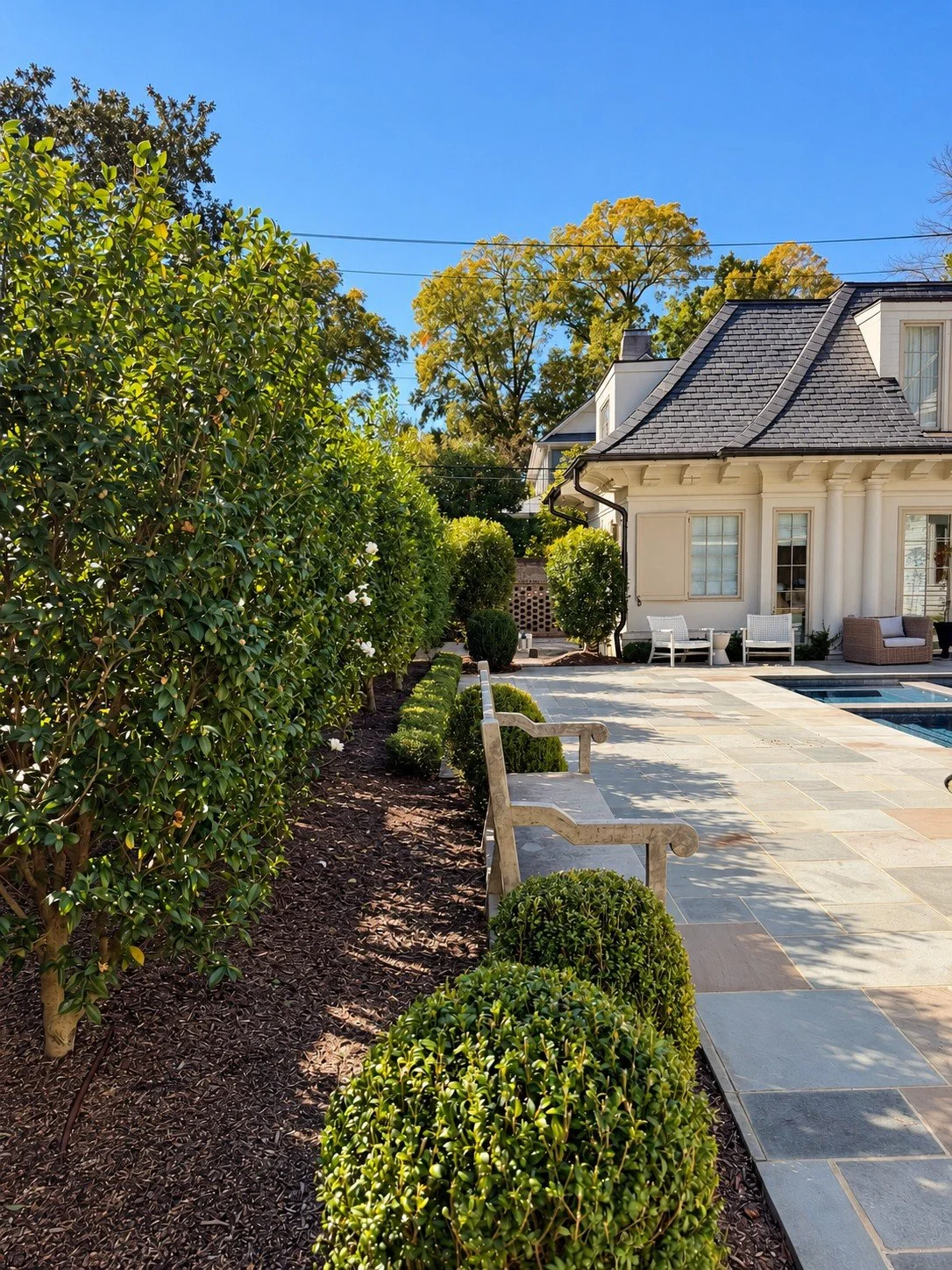
Inspired by the timeless gardens of Charleston, we combined bluestone, weathered brick, shaped boxwoods, hollies, camelias and creeping fig to create a classic, structured foundation. Layers of evergreen planting soften the hardscape and bring year-round fullness, creating a garden that feels welcoming, lush and quietly luxurious.
The Transformation
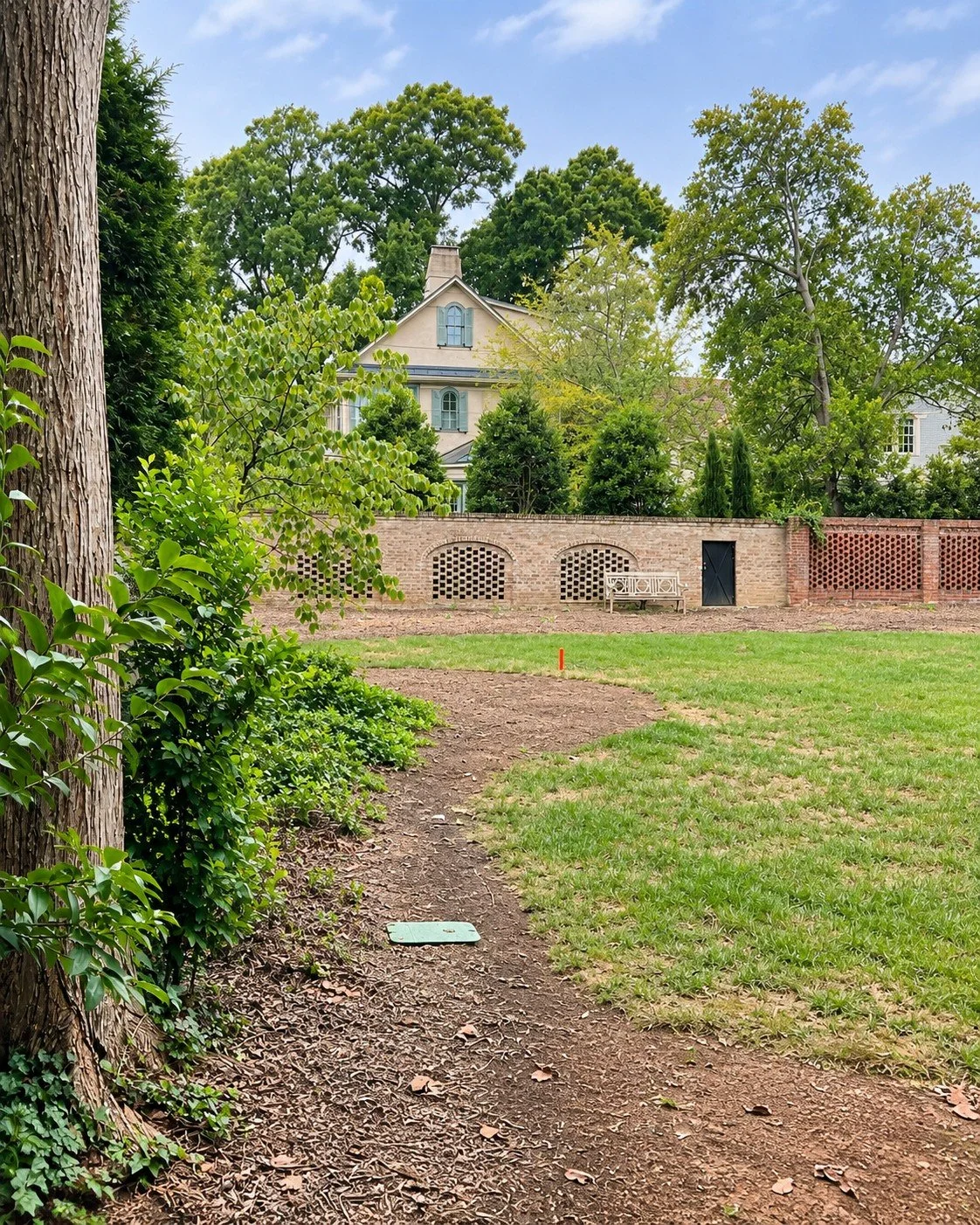
The transformation began by establishing the architecture and giving the property a clear framework. From there, we defined individual outdoor rooms, connected them through thoughtful passages and sightlines, and layered hardscape, evergreen planting and architectural details to create a garden that feels both structured and abundant.
Design Details
01 |Establishing the Structure
Give the Property a Framework
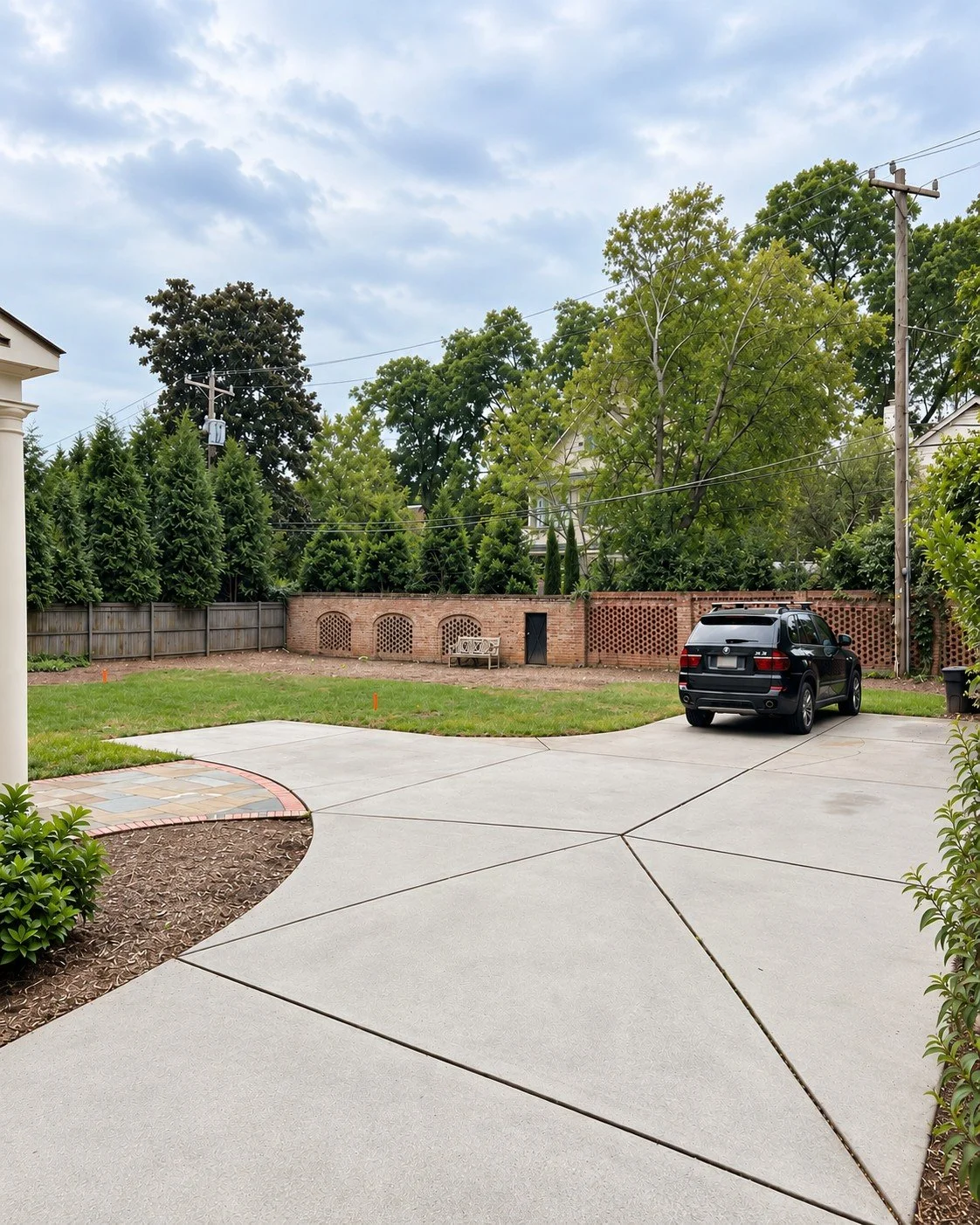
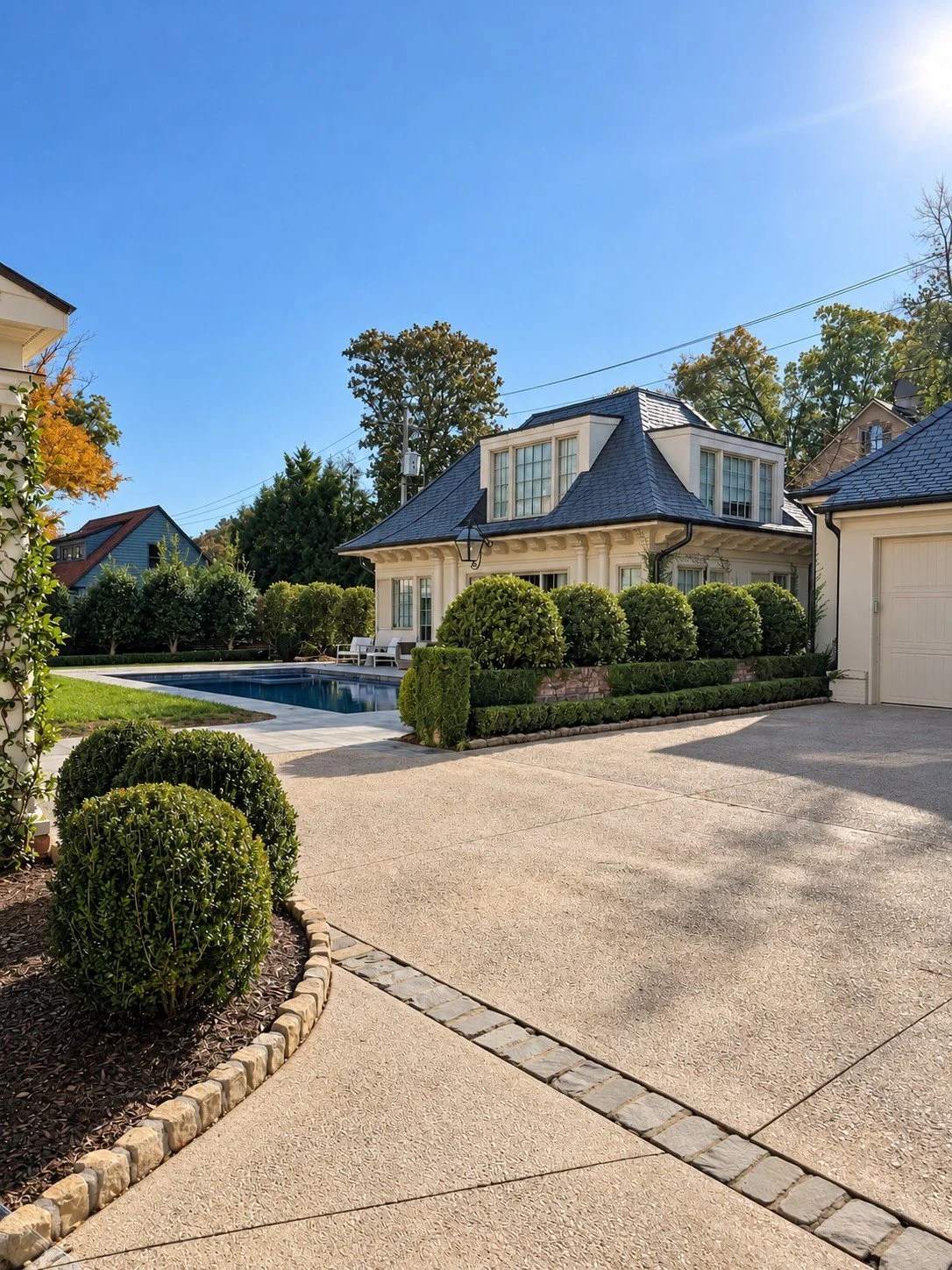
Before
After
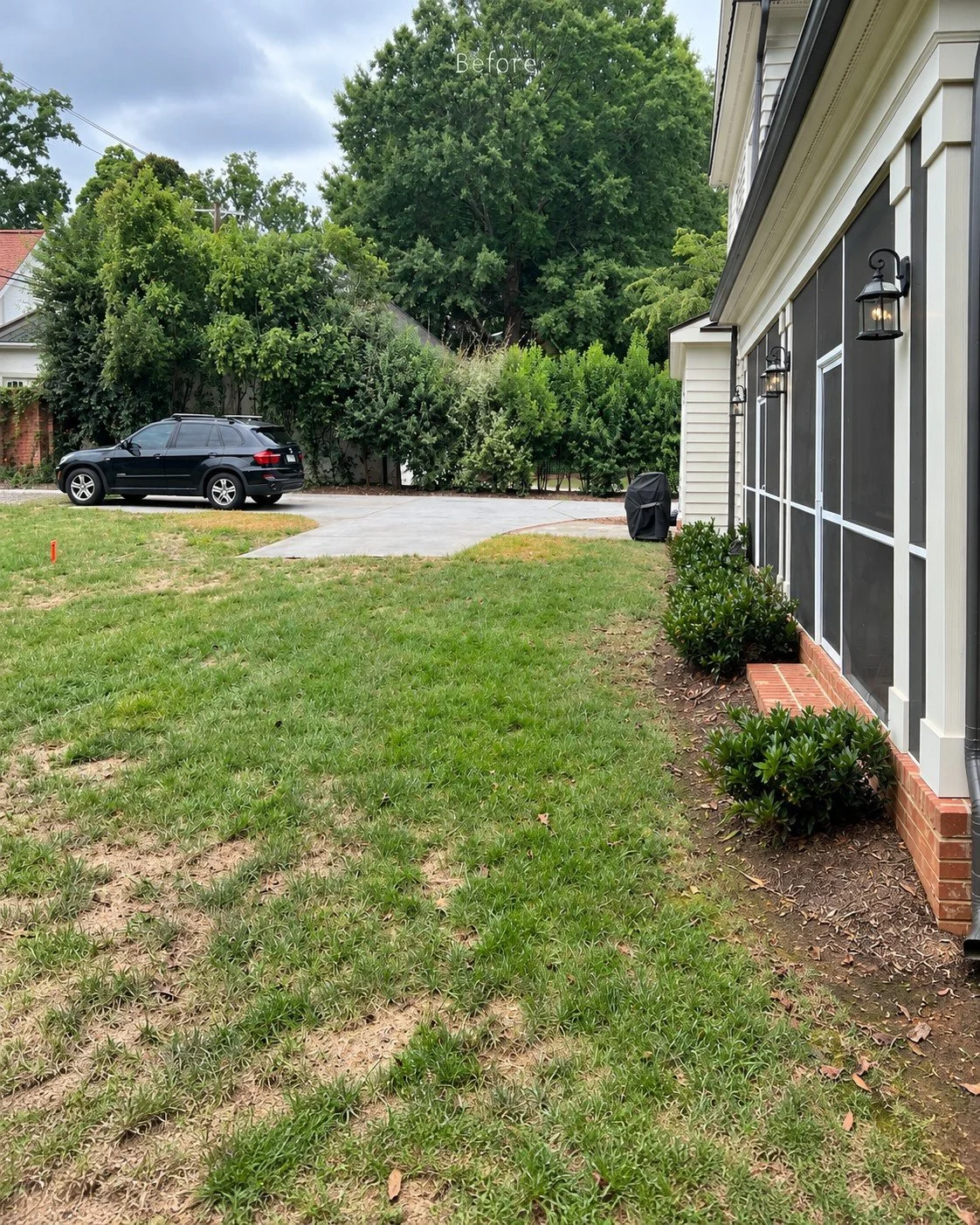
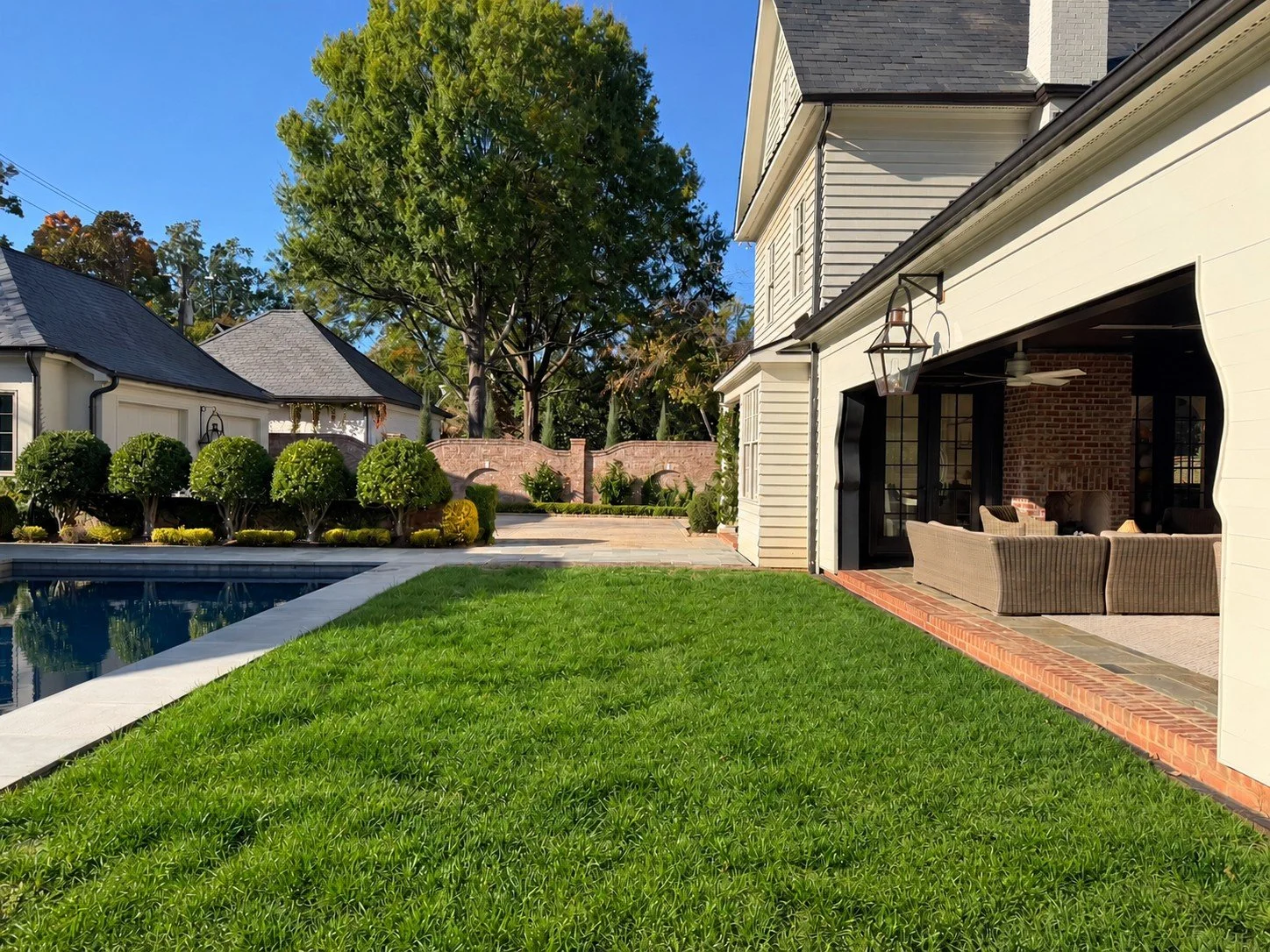
Before
After
Connect the House to the Garden
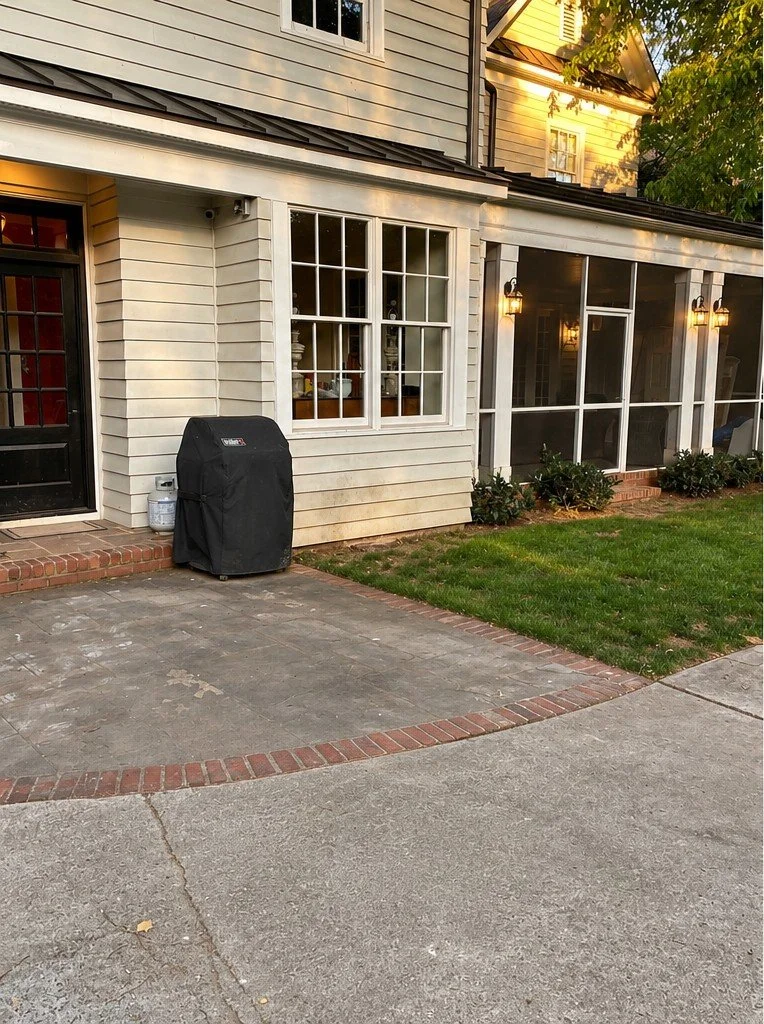
Before
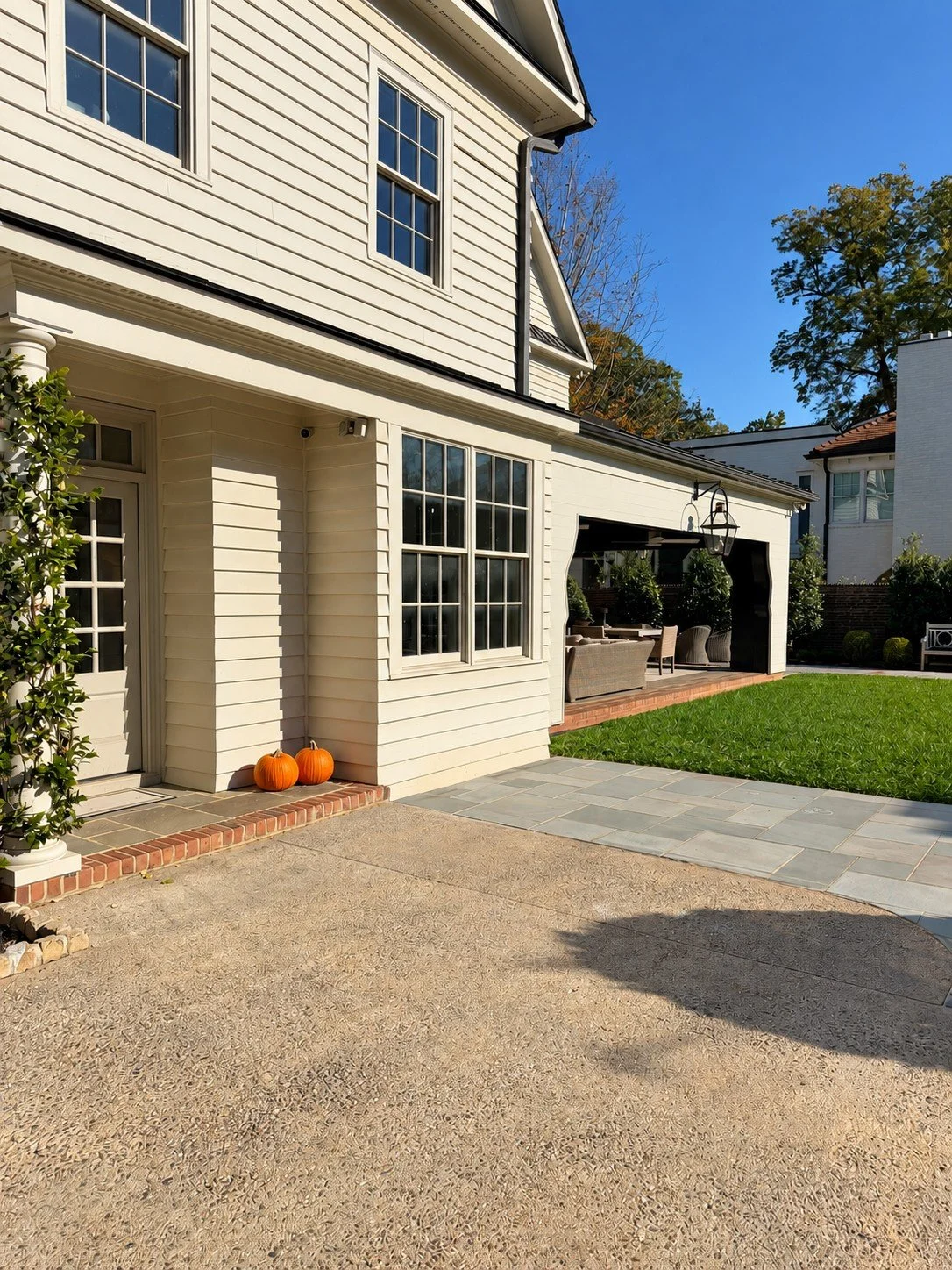
After
Turn Leftover Spaces into Destinations
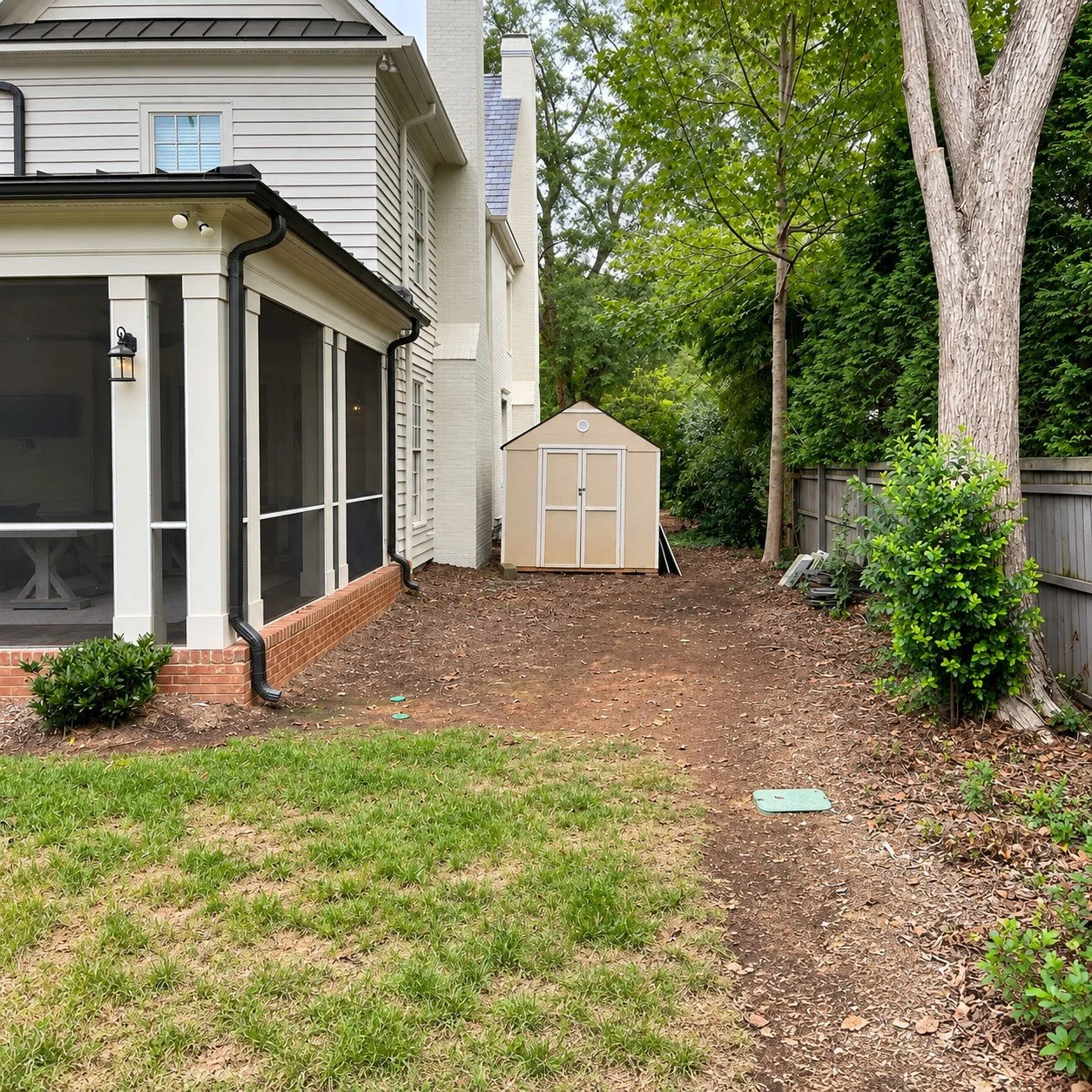
Before
After
Before
After
Before | During Construction
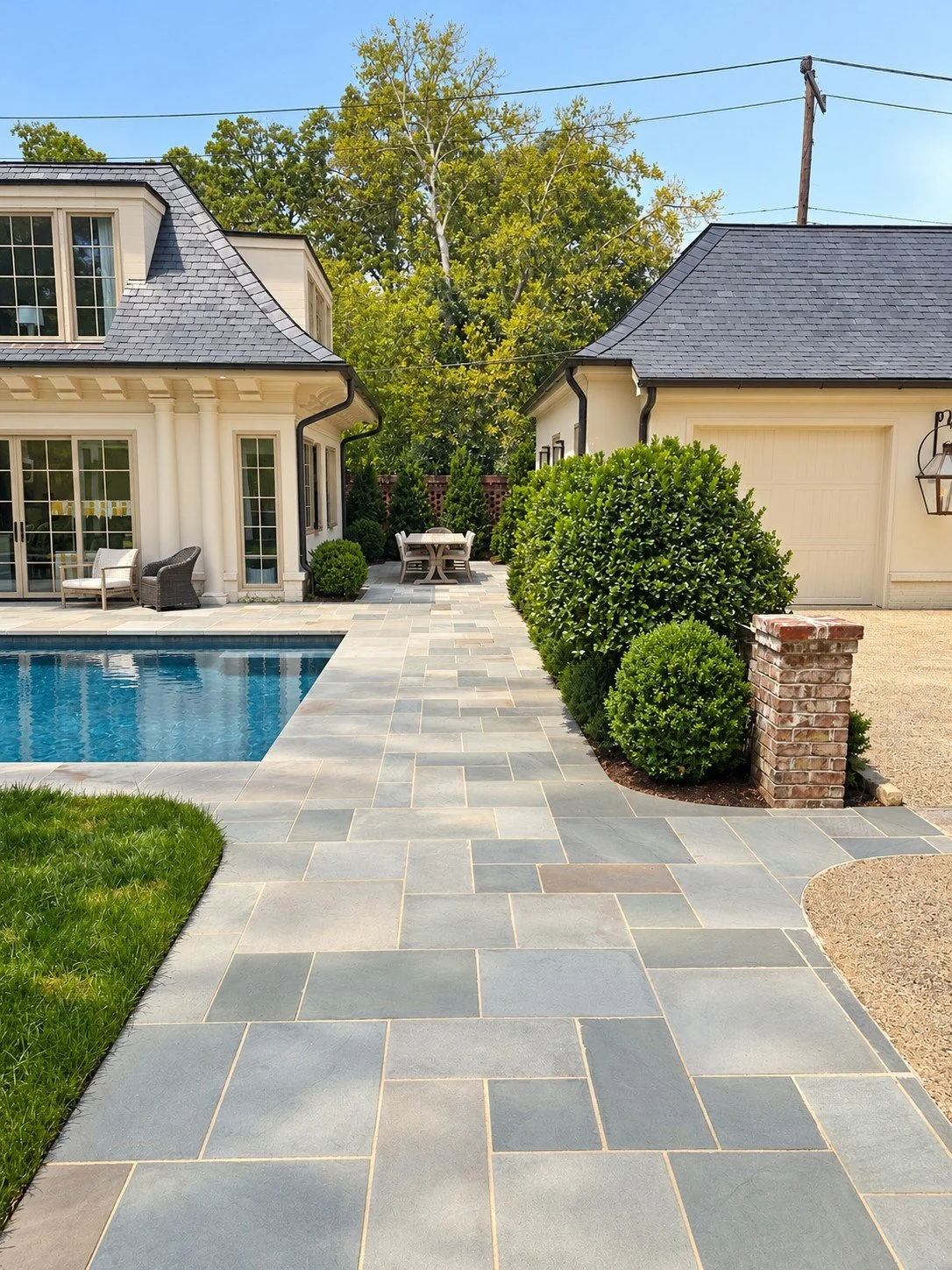
After
The Thinking Behind It: Before choosing plants or finishing details, consider how the entire property should function. Establish the major spaces, give each a purpose, and think about how people will move between them. A thoughtful framework makes even the smallest passages feel intentional—and allows the landscape to connect everything into a cohesive whole.
02 | Create Rhythm Through Repetition
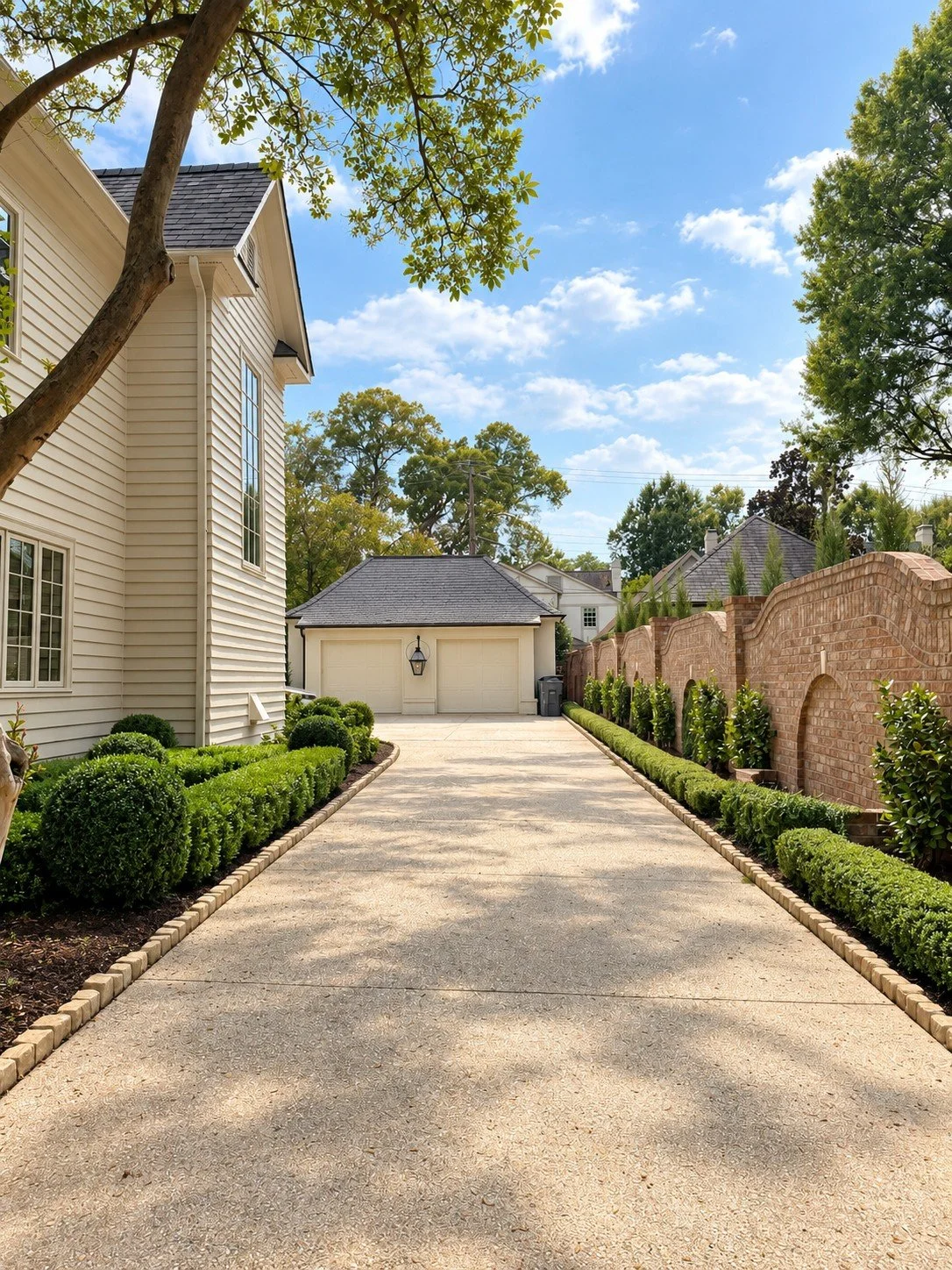
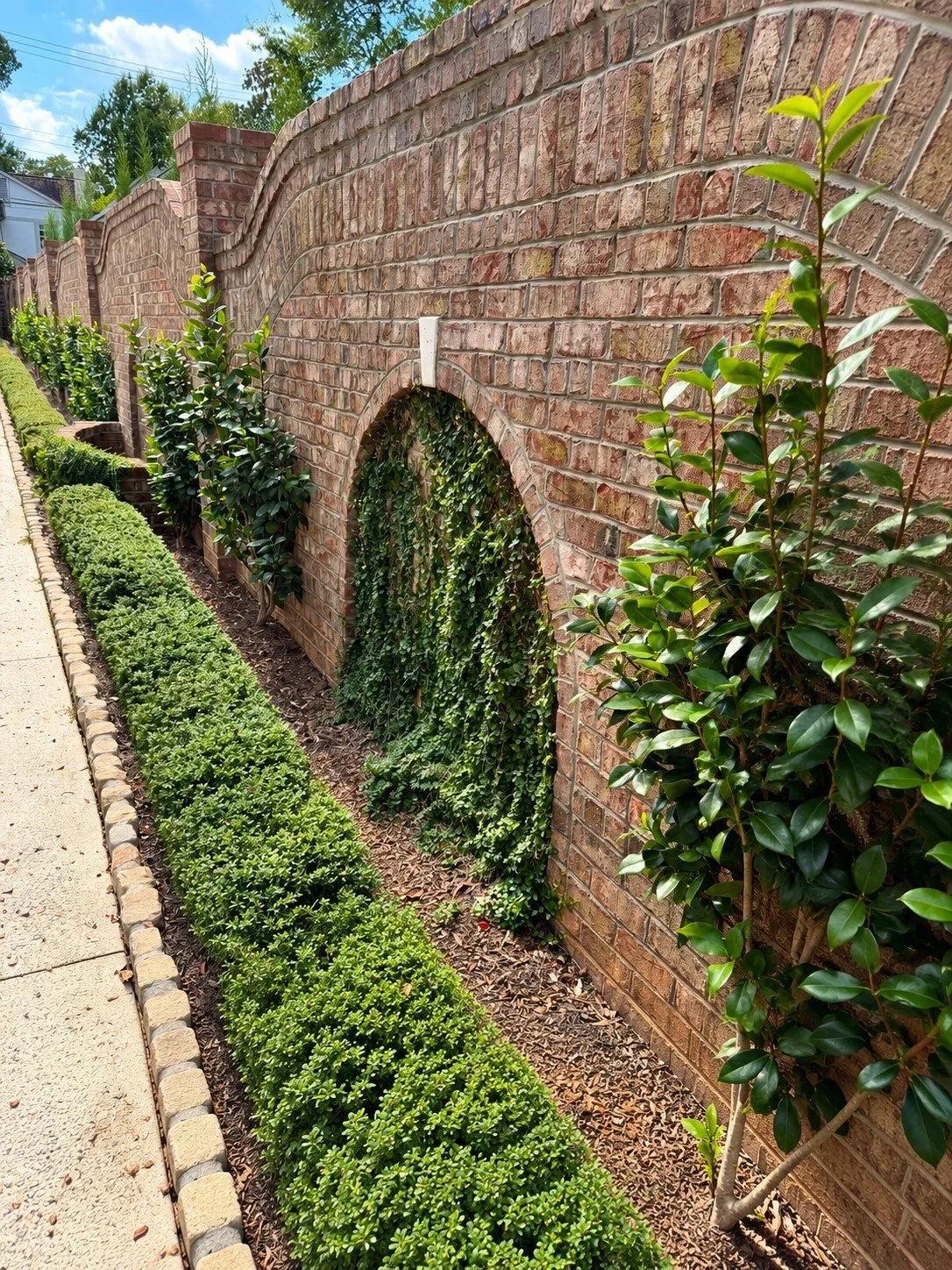
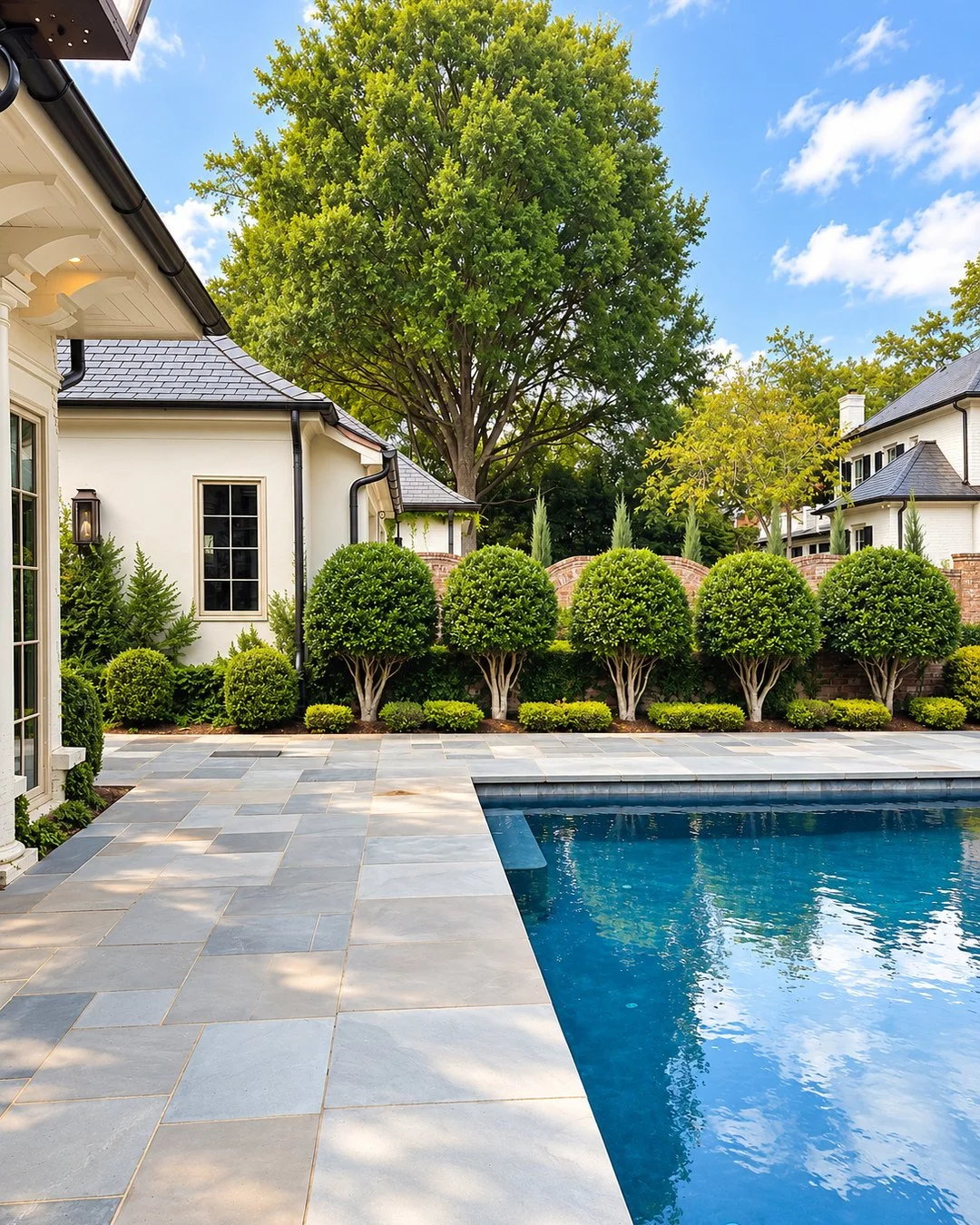
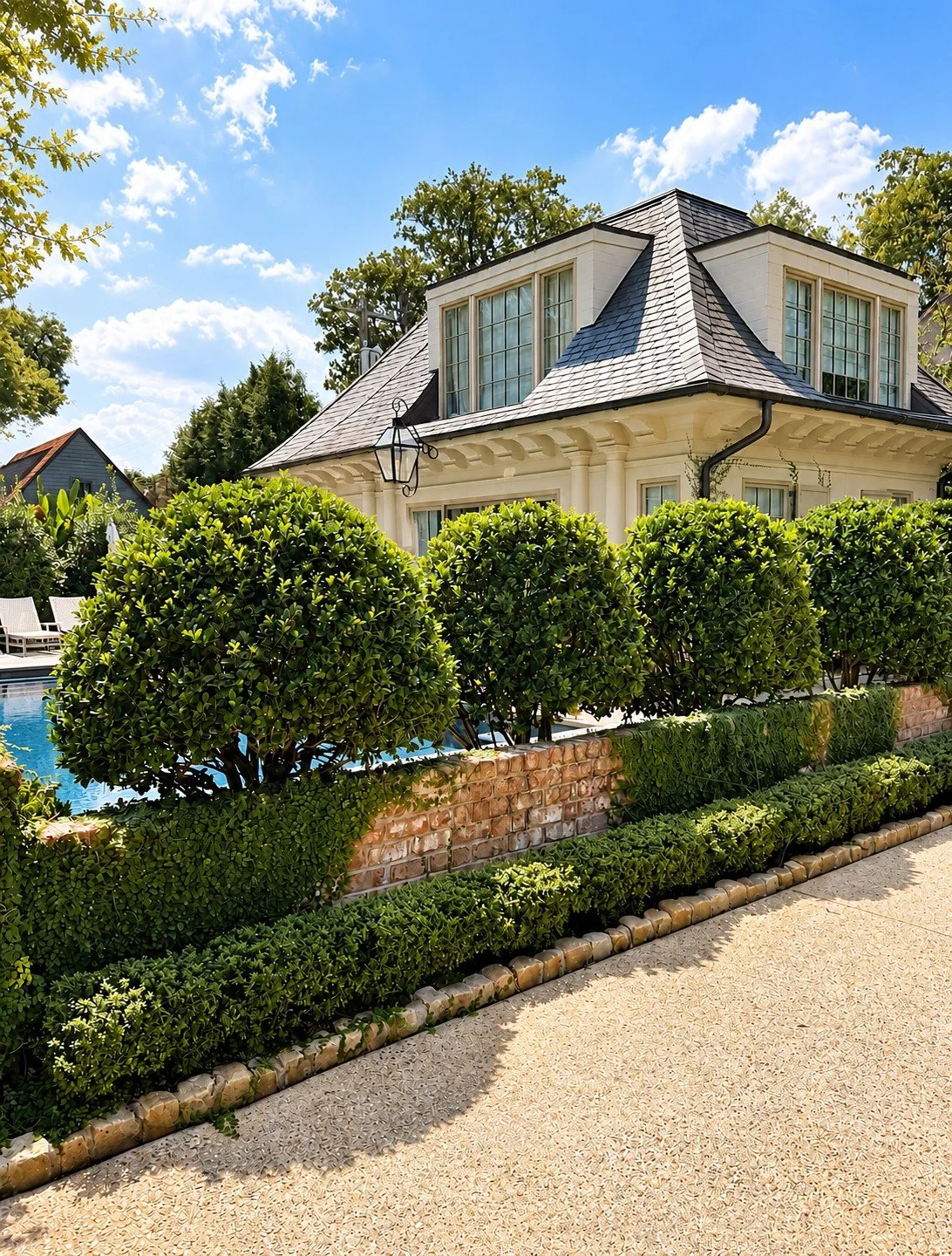
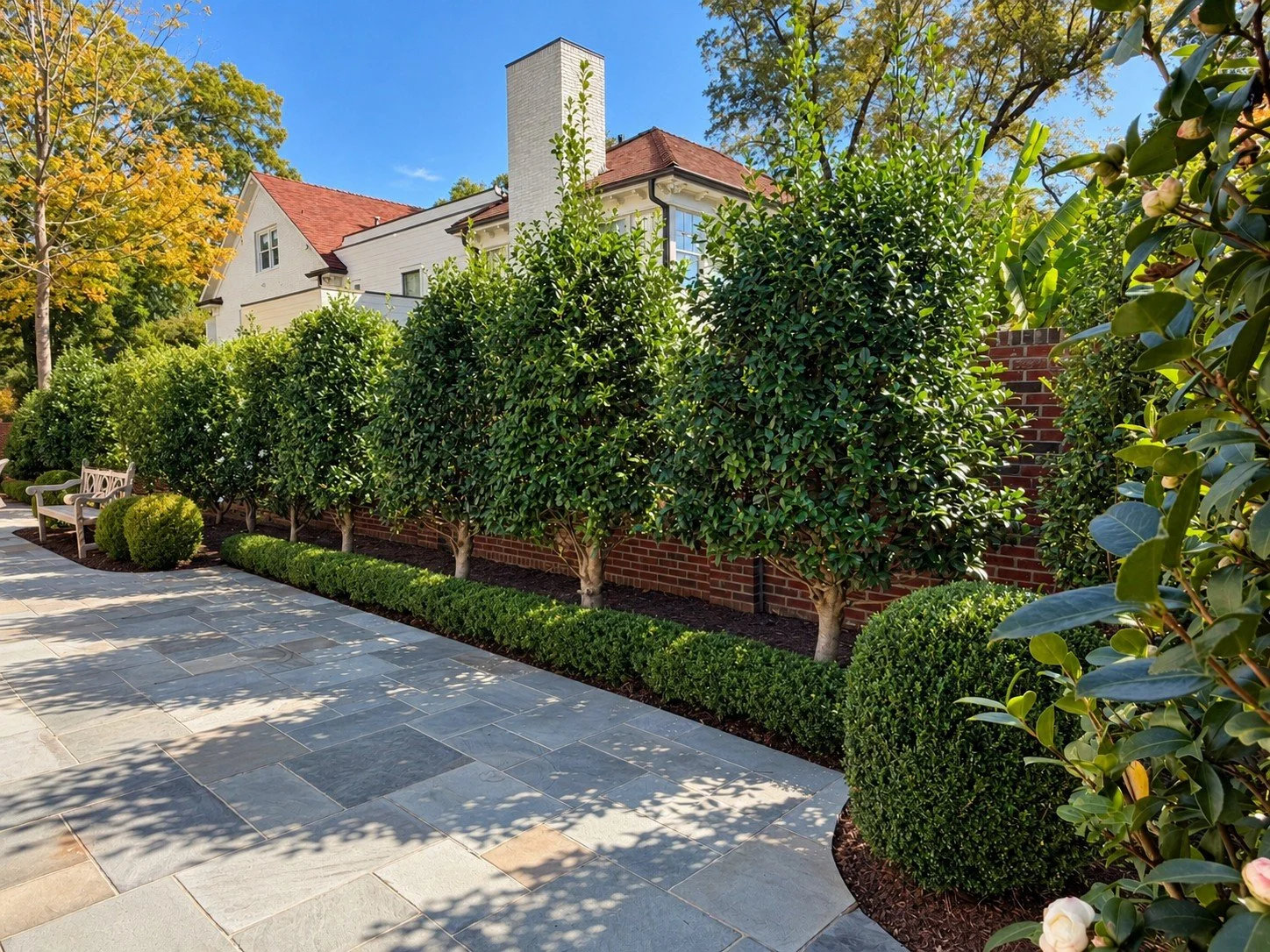
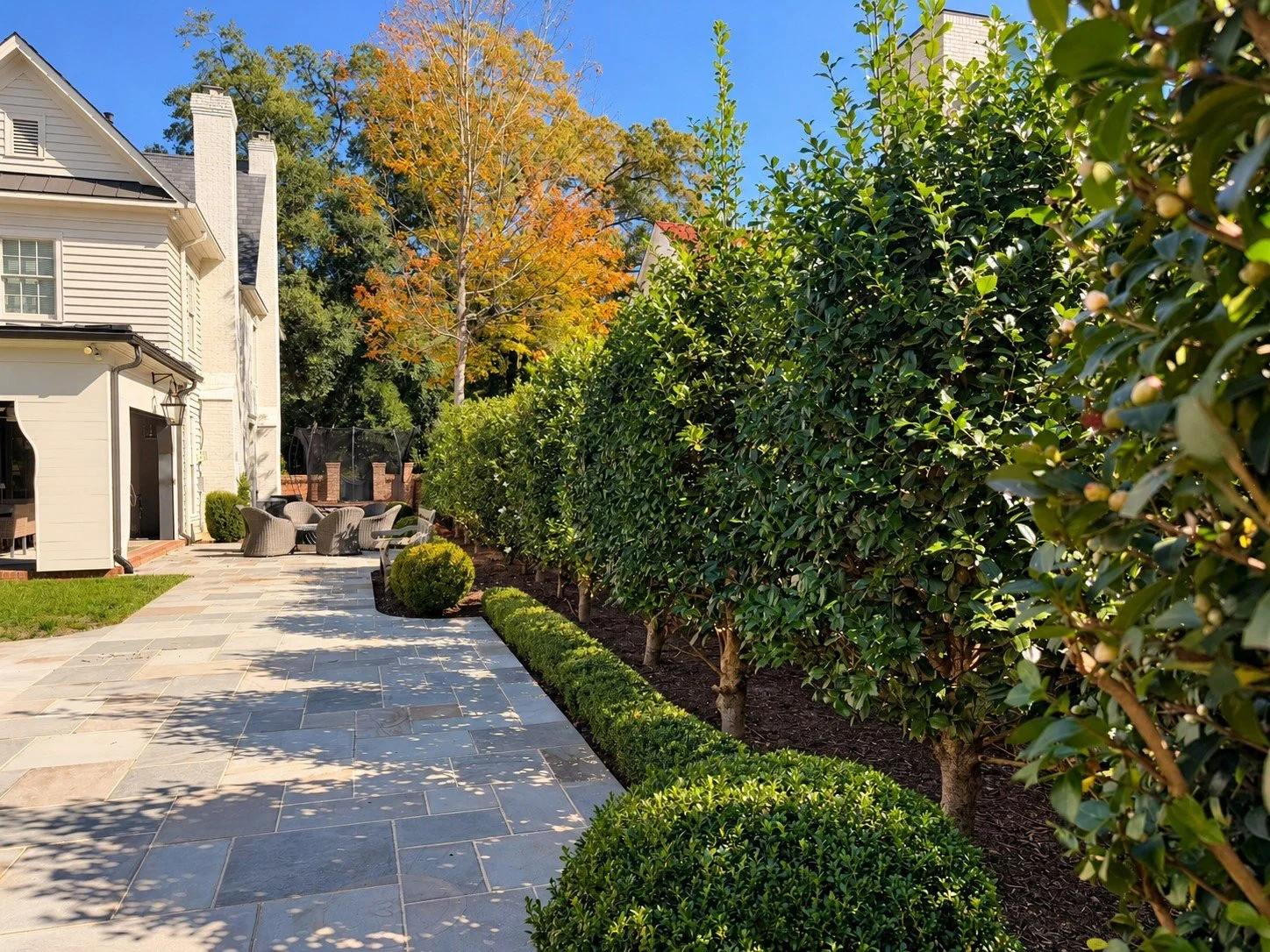
The Thinking Behind It: Repetition gives the eye something familiar to follow. Using recurring plant shapes, materials and proportions creates a sense of order, even as the garden moves between different outdoor rooms. Varying the heights, textures and layers keeps that structure from feeling rigid, allowing the landscape to feel both manicured and abundant.
03 | Layer for Abundance
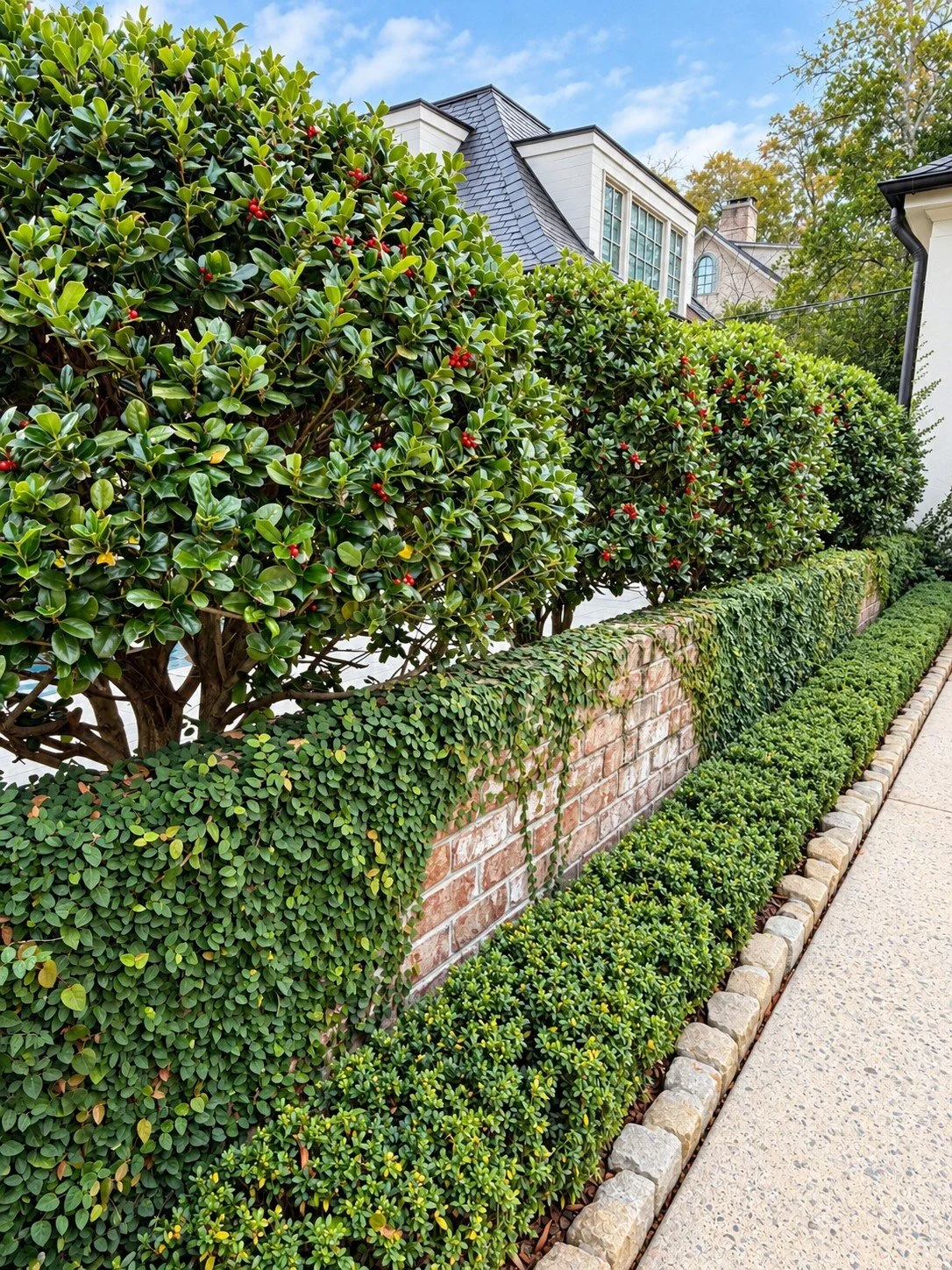
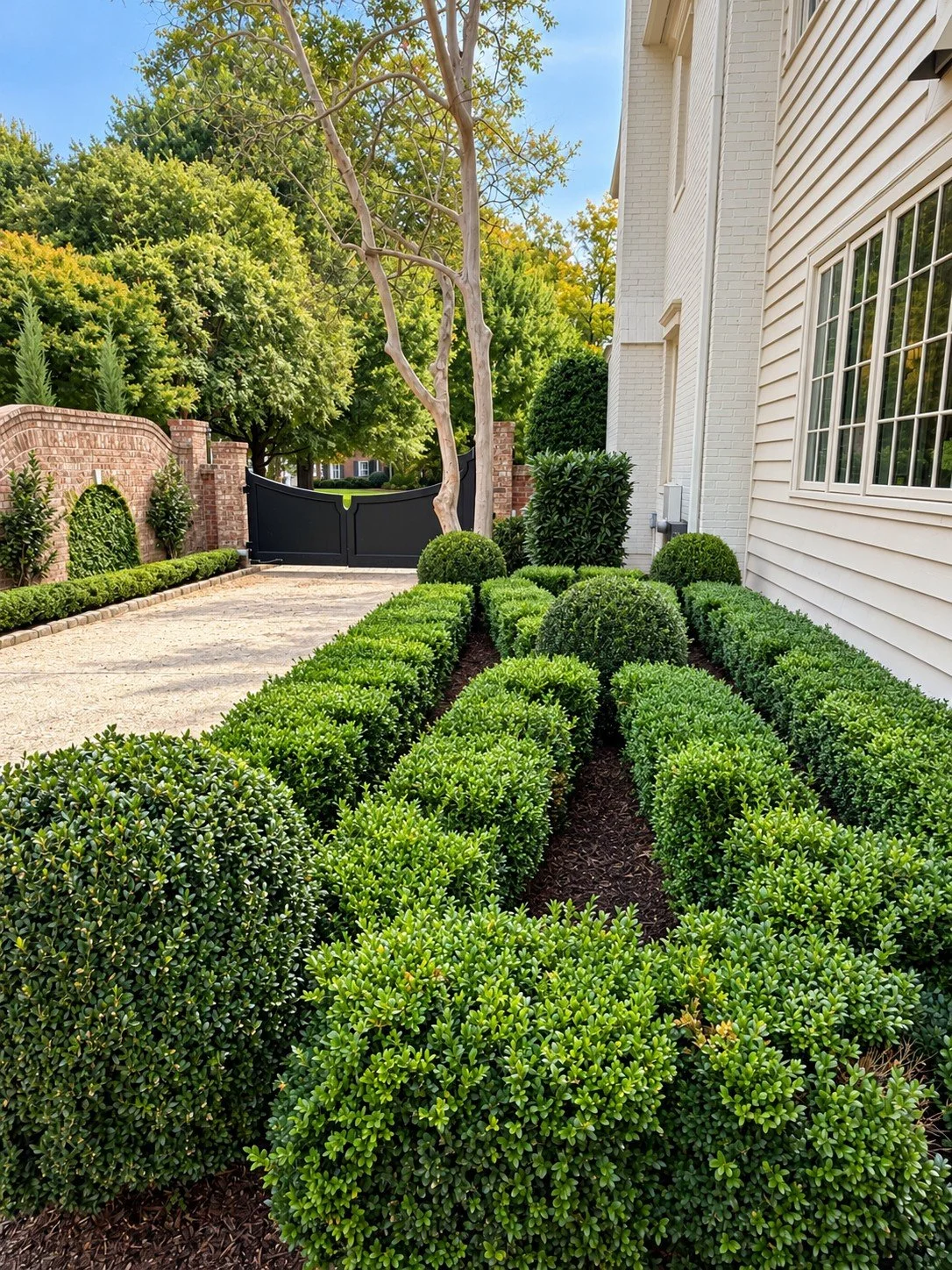
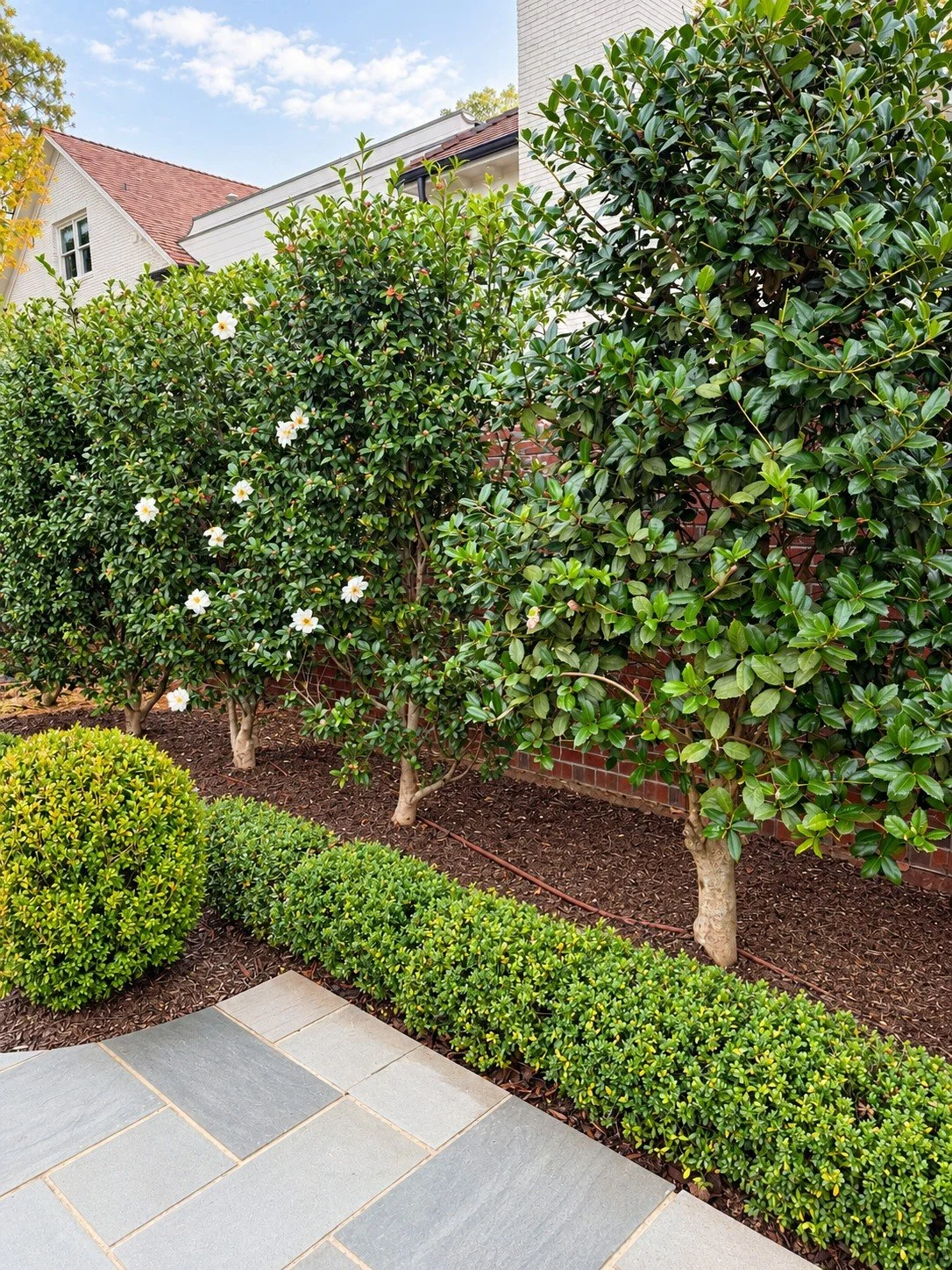
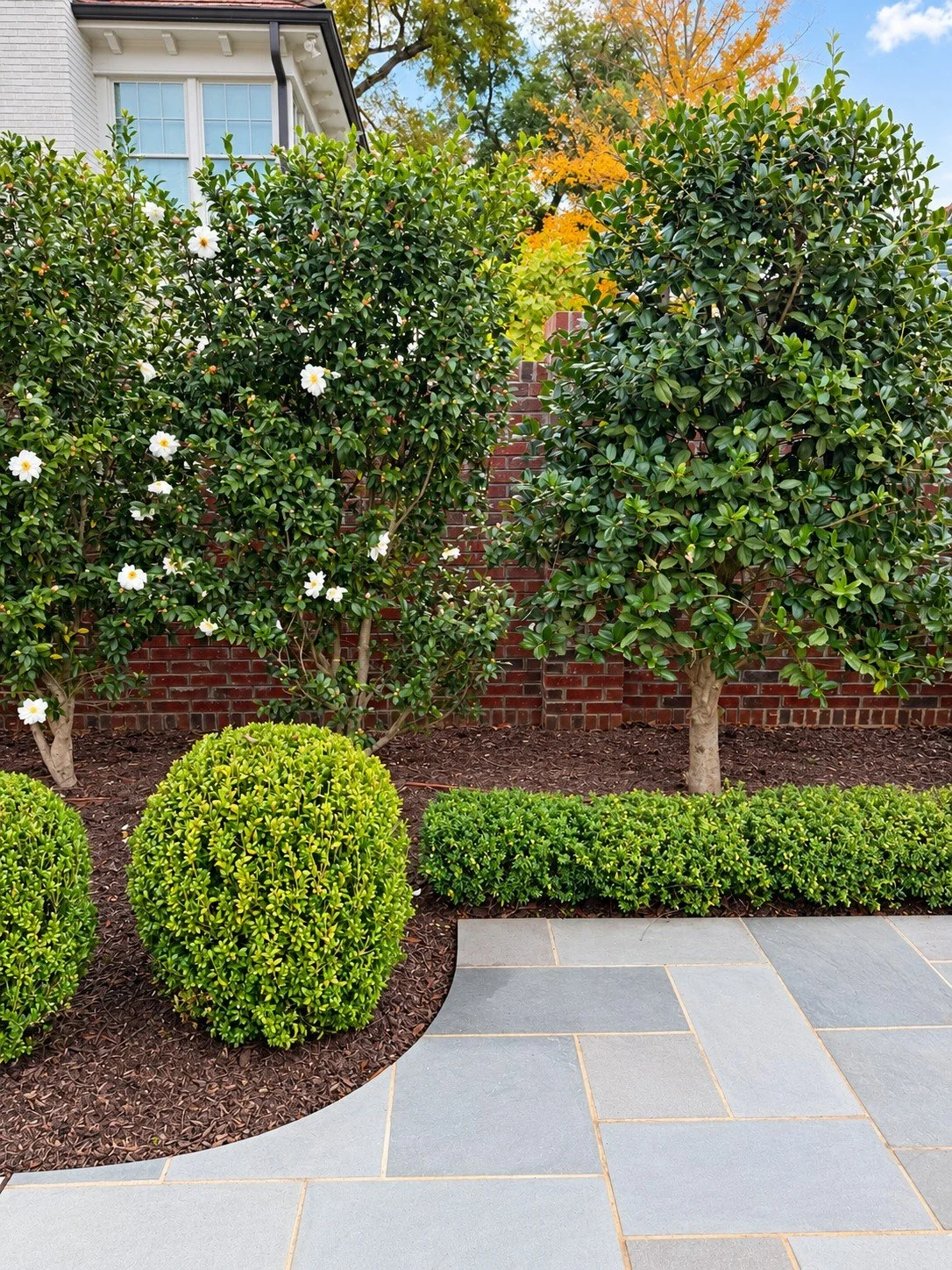
The Thinking Behind It: Layering gives a garden its sense of abundance. Textured stone laid in a soldier-course pattern and weathered brick establish a structured foundation. Against these harder materials, plants of varying heights, shapes and textures create depth and softness. Abundance doesn't require endless varieties of plants. Repeating a thoughtful selection in different forms and combinations creates richness without visual clutter.
Planting Palette: Hollies and camellias provide height, screening and year-round greenery, while Japanese soft touch hollies and boxwoods establish lower layers and defined edges. Hollies appear in both topiaried and more natural forms, creating variety within a consistent planting palette. Espaliered camellias and creeping fig soften the brickwork and introduce additional texture. Together, these repeated plants create a landscape that feels full, cohesive and thoughtfully composed.