
Cultivating an Eye | Garden & Outdoor Living
Shape the View
Thoughtful sightlines turn everyday views into moments of discovery.
The beauty of an outdoor space is shaped not only by what is planted or built, but by how it is experienced. From carefully framed views through windows and garden openings to the placement of trees, hedges, and architectural features, intentional sightlines draw the eye, create connections between spaces, and reveal something beautiful along the way.
Consider Views from the Inside Out
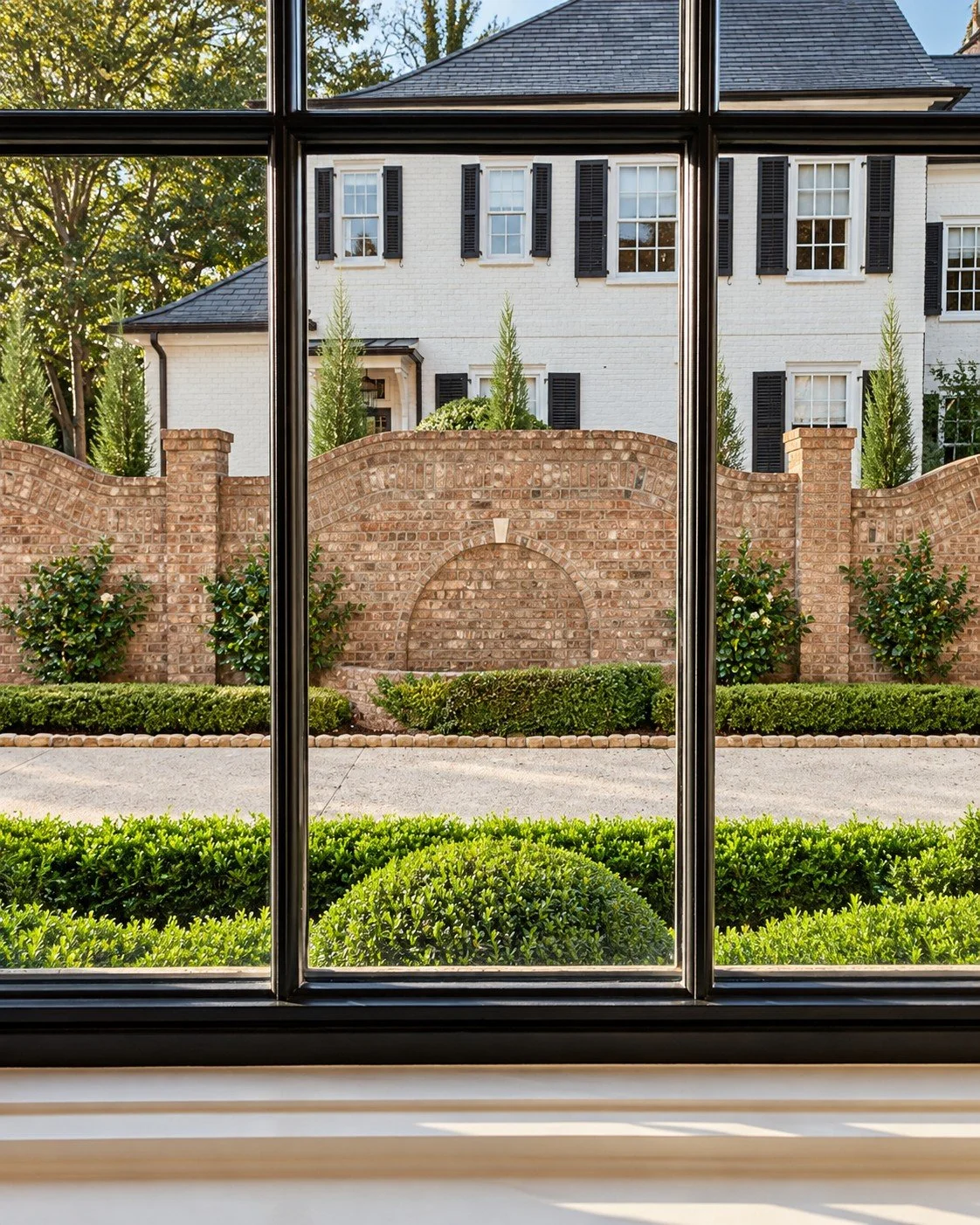
A carefully aligned sightline from the kitchen window to the brick garden wall and fountain beyond
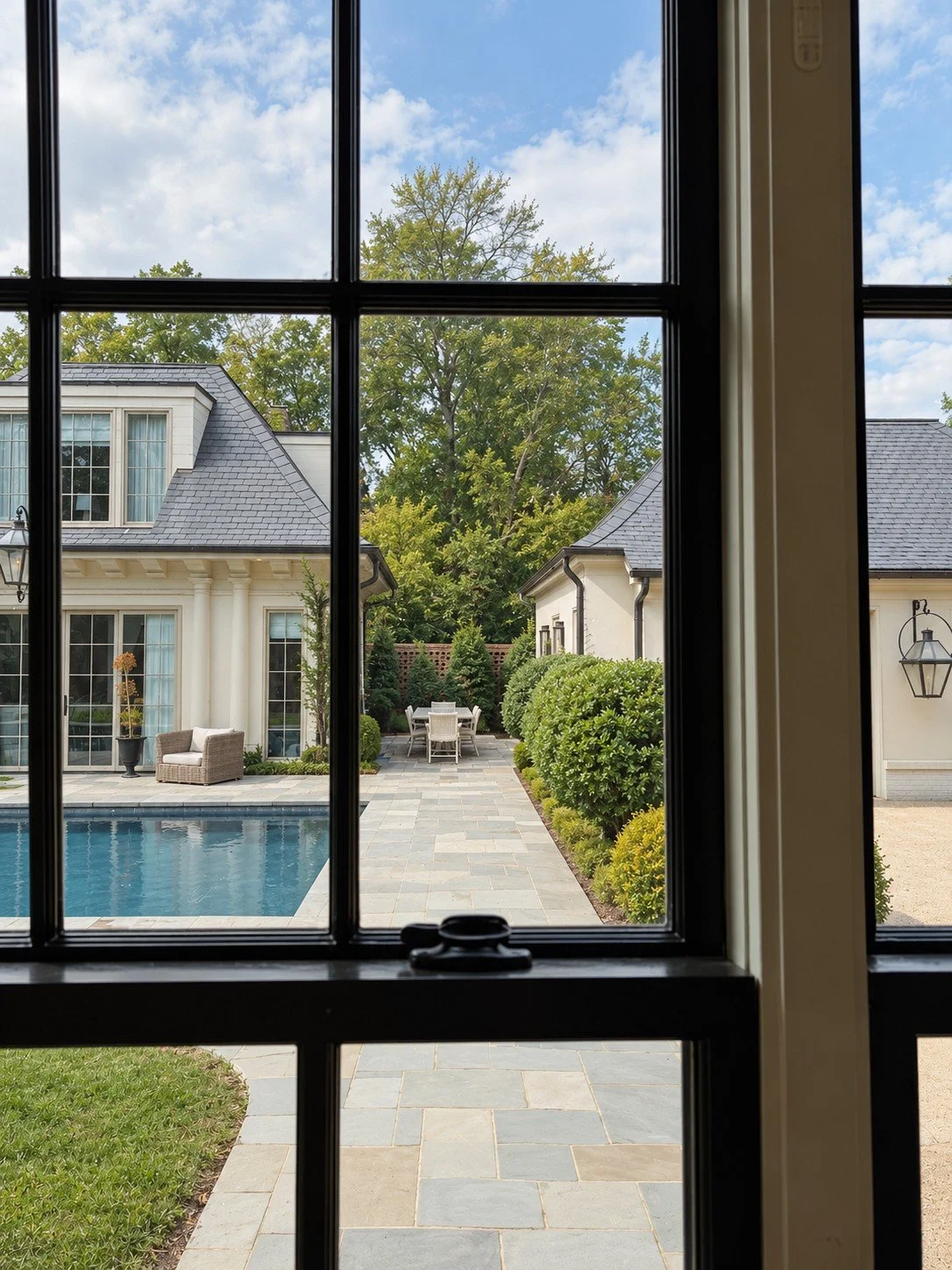
A view across the pool, framed by the window and surrounding architecture, connects the interior to the outdoor spaces
A thoughtfully designed outdoor space should be just as beautiful when viewed from inside the home. Consider what each window frames, where the eye naturally lands, and how architecture, landscaping and focal points work together to create a composed view.
Give the Eye a Destination
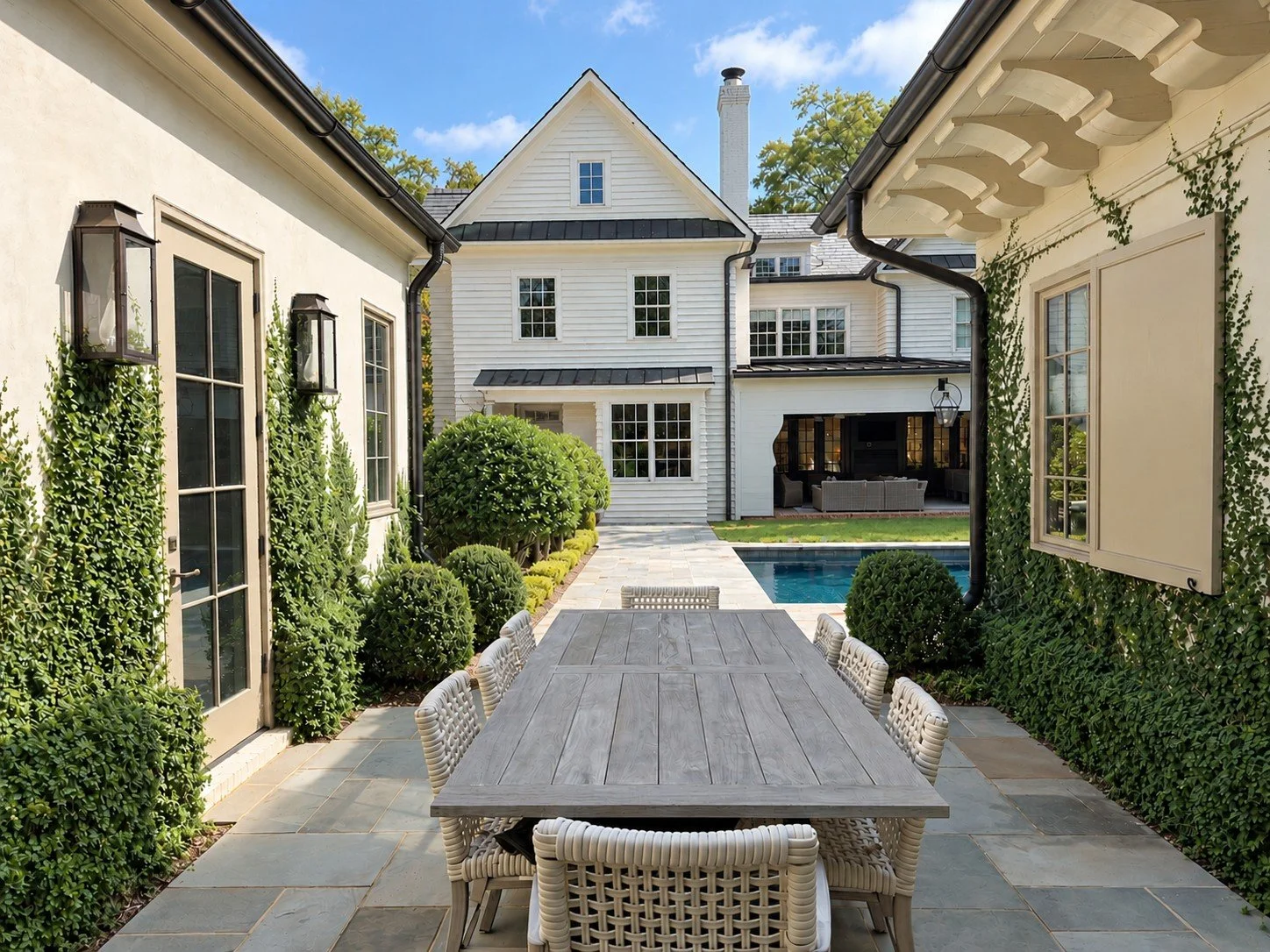
The buildings and planting frame a view toward the house, drawing the eye through the outdoor dining space
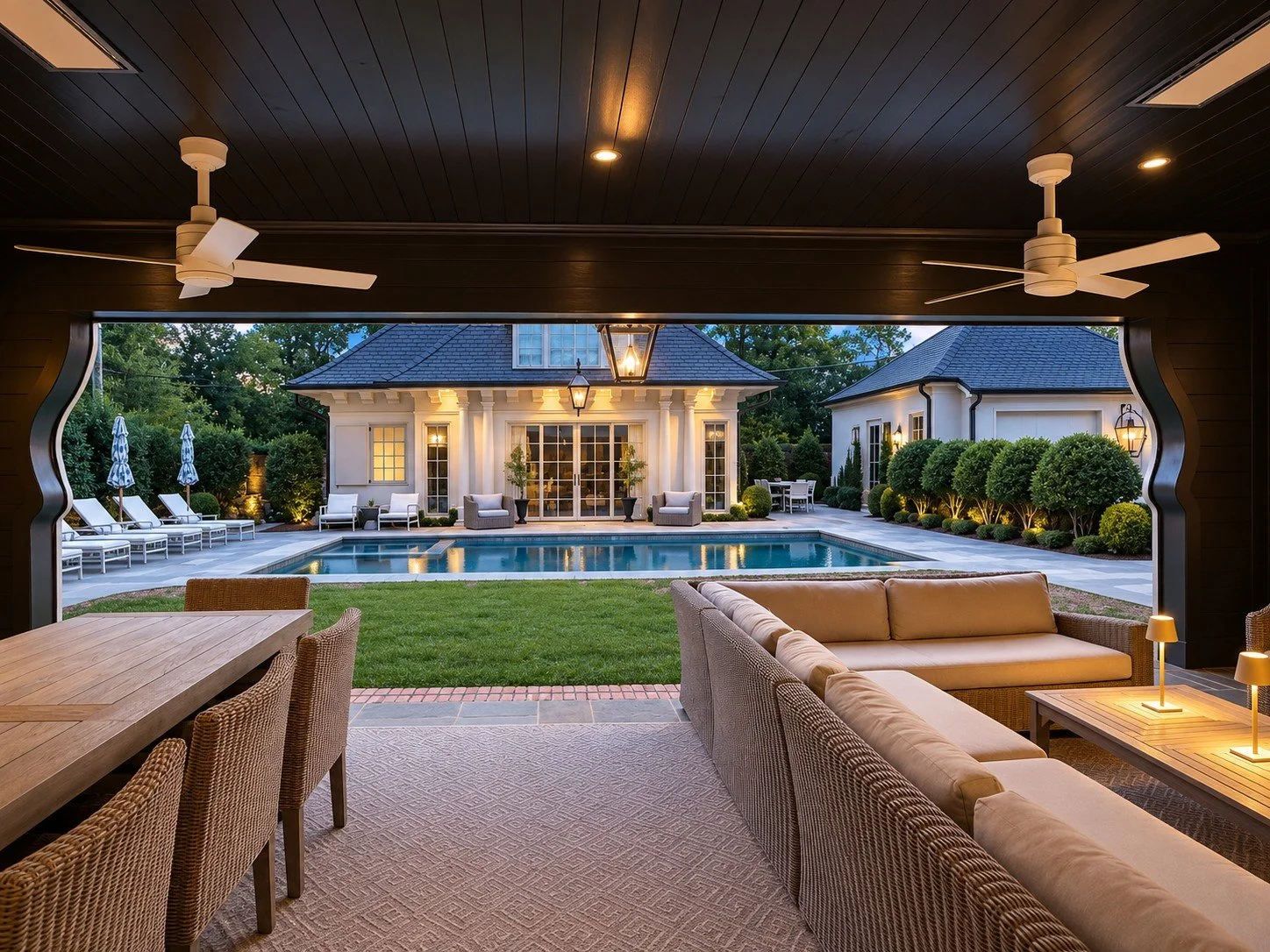
The porch opening frames the poolhouse beyond, turning the view into a focal point of the room
A beautiful view gives the eye somewhere to go. Whether it's a building at the end of a pathway or a poolhouse framed by an outdoor room, a clear focal point creates direction, balance and a sense of purpose.
Create a Sense of Discovery
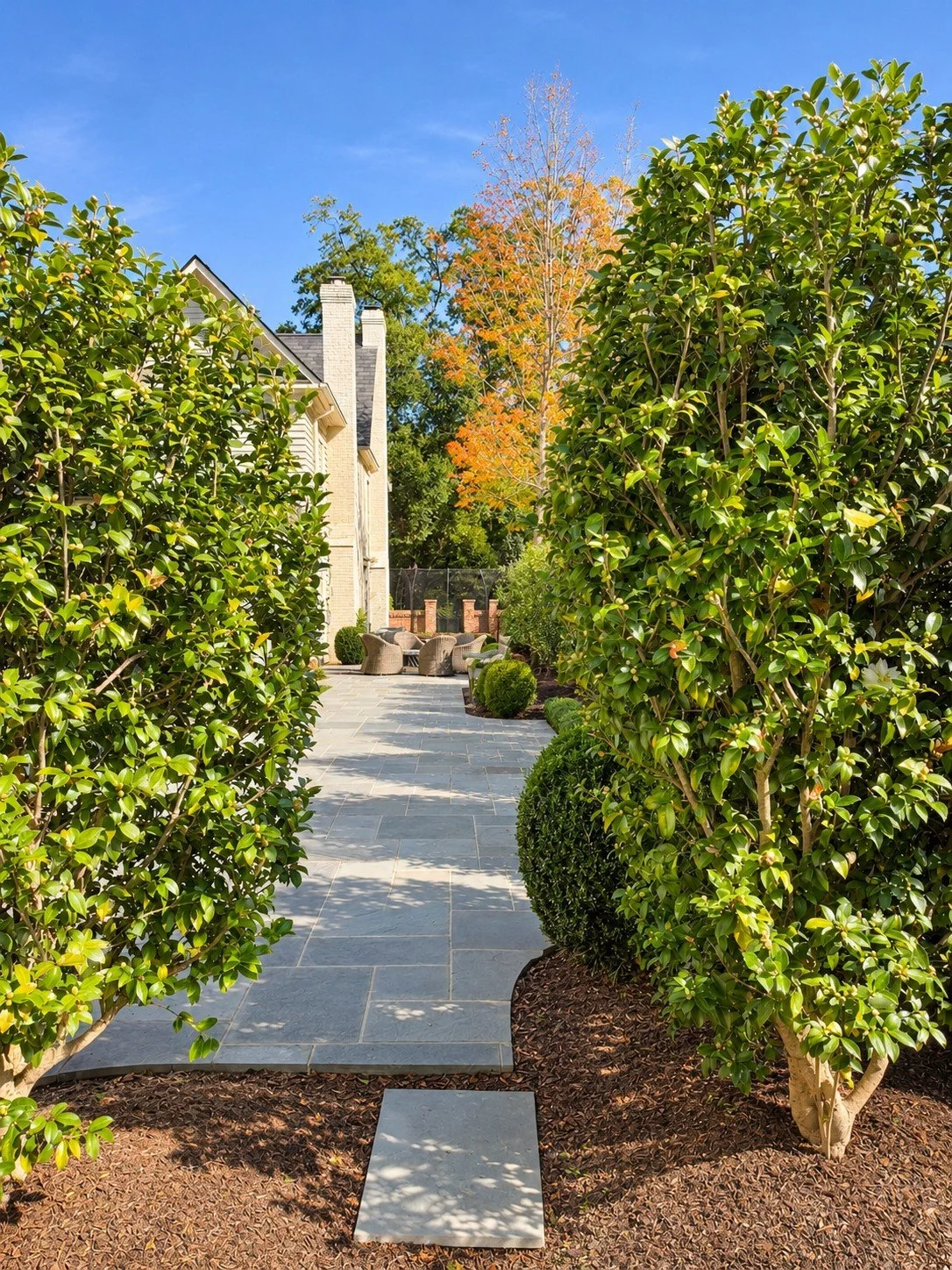
Closely planted trees create a natural “gate”, offering just a glimpse of the space beyond
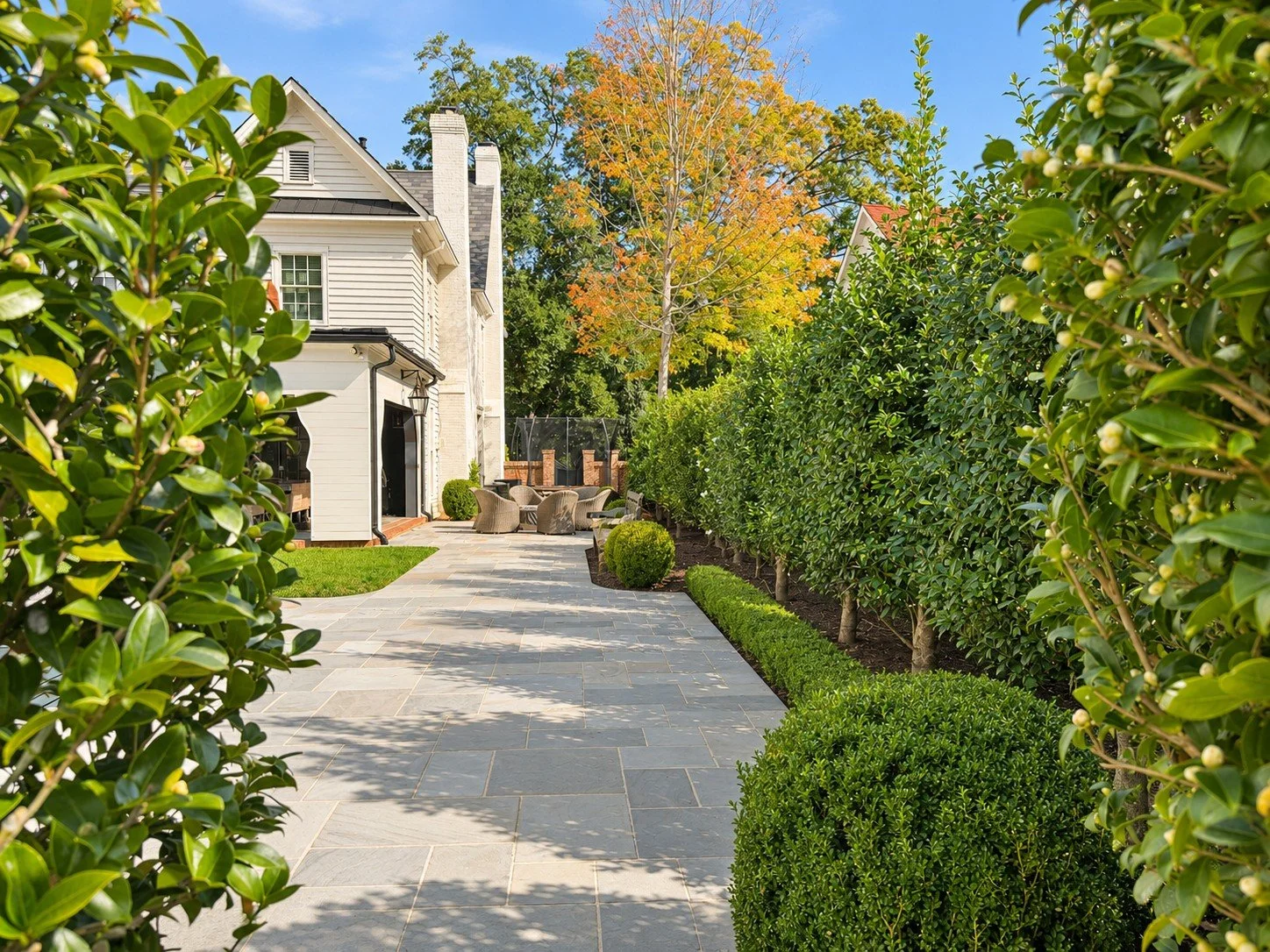
Moving through the opening reveals the pathway and seating area ahead
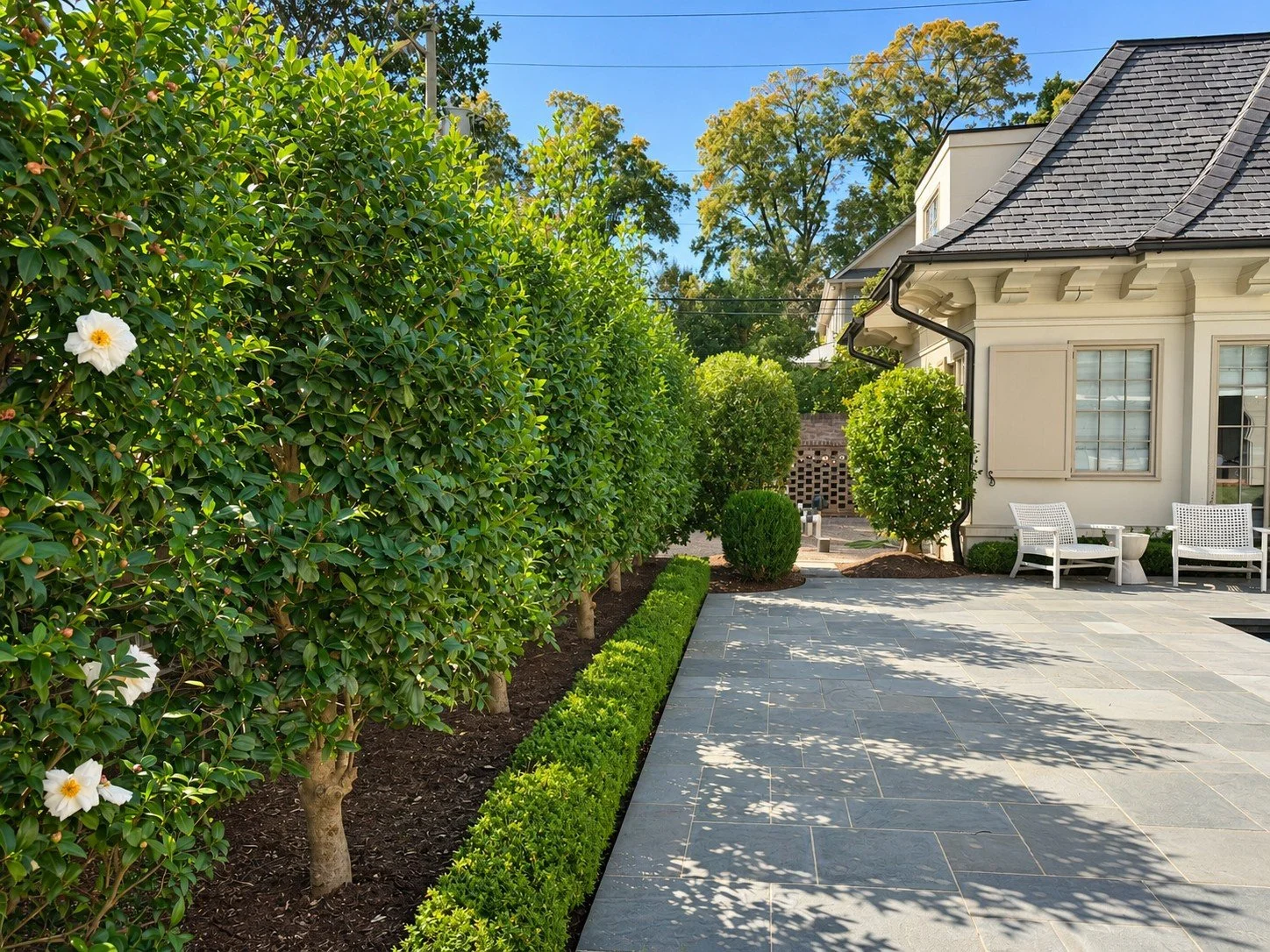
Looking back toward the natural “gate” from the passage to the seating area
Not every view needs to be revealed at once. Layering plantings and allowing glimpses of what lies beyond creates curiosity and encourages movement through the garden. As the perspective changes, new spaces gradually come into view.
Use Planting to Shape What You See
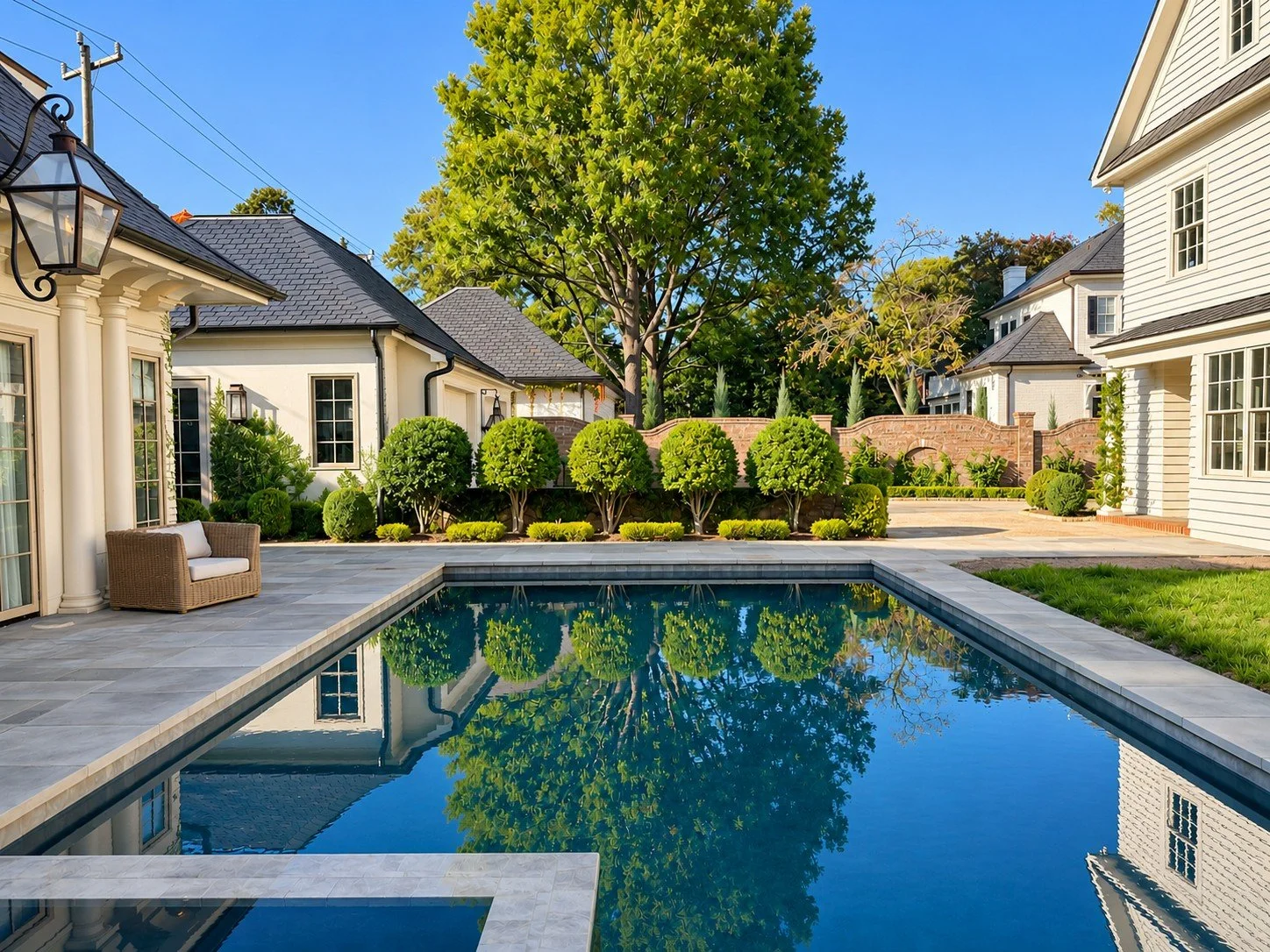
A repeated row of clipped trees creates a strong visual rhythm and frames the pool against the brick garden wall
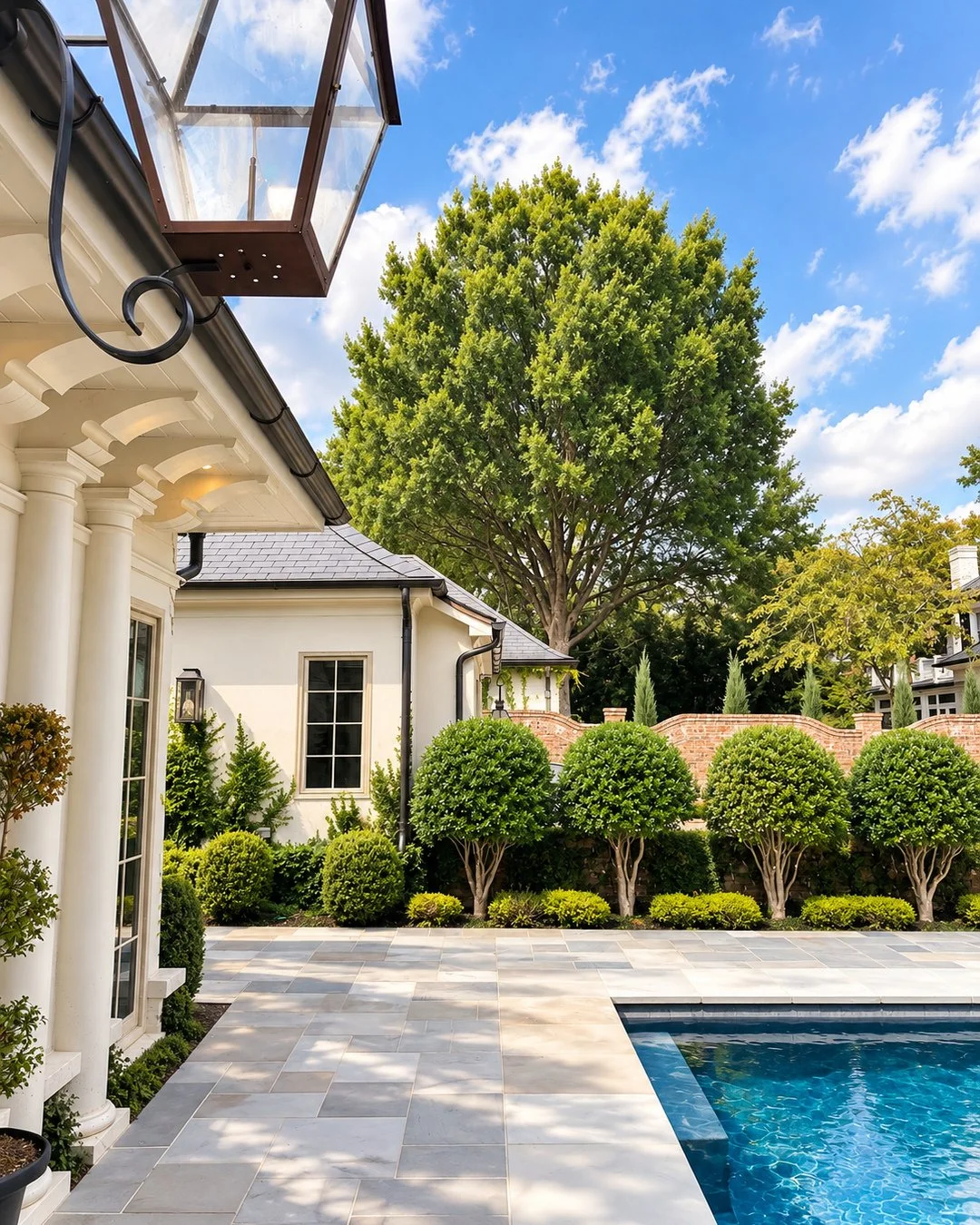
The rounded forms of the topiaries balance the surrounding architecture & reinforce the garden's sense of order
Planting does more than soften a landscape. It can establish boundaries, create rhythm, conceal distractions and direct attention toward the elements you want to emphasize. Repeated forms and carefully considered proportions bring structure and cohesion to an outdoor space.
Create a Moment at the End of a View
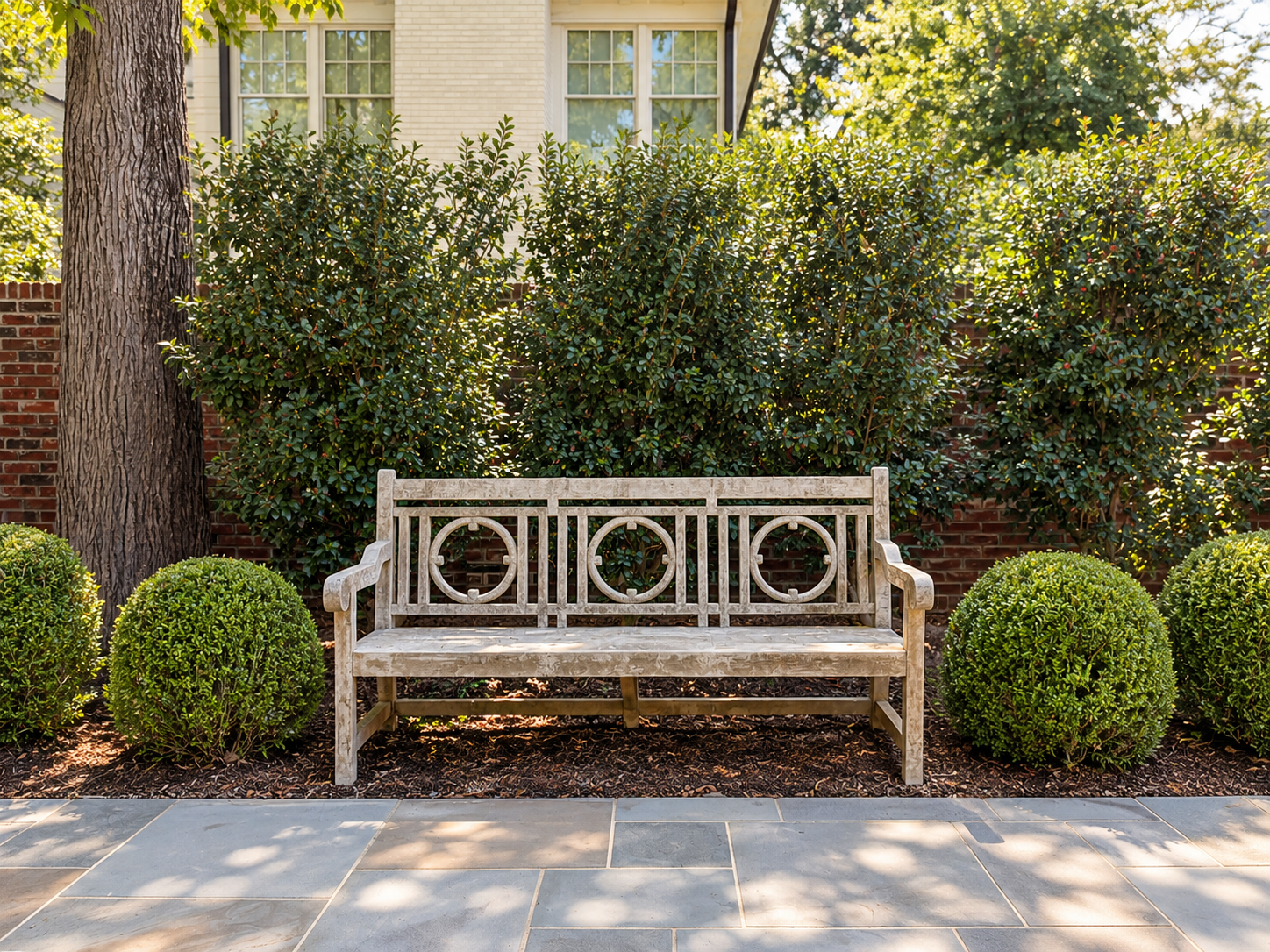
A garden bench framed by layered greenery and rounded shrubs creates a simple, inviting focal point and the end of the lawn on the path connecting a patio to the pool
Sometimes a single thoughtfully placed element is all it takes to complete a view. A bench, sculpture, planter or architectural detail can create a beautiful stopping point for the eye, giving even a quiet corner of the garden a sense of intention.
01 | Consider view from the inside out
Outdoor design shouldn't begin at the back door. Consider the views from the rooms where you spend the most time, and think about what you want to see through each window. Aligning focal points, framing architectural details, and creating intentional sightlines can make the landscape feel like an extension of the home.
02 | Give the eye a destination
A compelling view needs somewhere for the eye to land. A garden bench, architectural feature, or building at the end of a pathway can provide a focal point that gives the surrounding space direction and purpose. Consider how paths, planting, and architecture can work together to lead the eye naturally toward that destination.
03 | Create a Sense of Discovery
Some of the most interesting outdoor spaces reveal themselves gradually. Rather than showing everything at once, use hedges, trees, garden walls, or architectural openings to offer glimpses of what lies beyond. These moments of partial concealment create curiosity and make moving through a garden part of the experience.
04 | Use Planting to Shape What You See
Planting can do much more than add greenery. Repeated shapes establish rhythm, layered hedges create depth, and carefully placed trees can frame a view or conceal something less attractive. Think of planting as a design tool that helps organize the landscape and direct attention toward what matters most.
Make it Your Own.
You don't need an elaborate garden or a perfectly planned landscape to create a beautiful view. Start by looking through the windows you use most often, or standing where you naturally enter an outdoor space.
Ask yourself what draws your attention. Is there something worth highlighting? Something you'd rather conceal? Could a simple focal point give the eye somewhere to land?
A thoughtfully placed planter, a pair of clipped shrubs, a garden bench, or even a change in how existing furniture is arranged can help frame a view, create a sense of discovery, or give an overlooked corner new purpose.
The goal isn't to see everything at once. It's to make what you see feel intentional.