
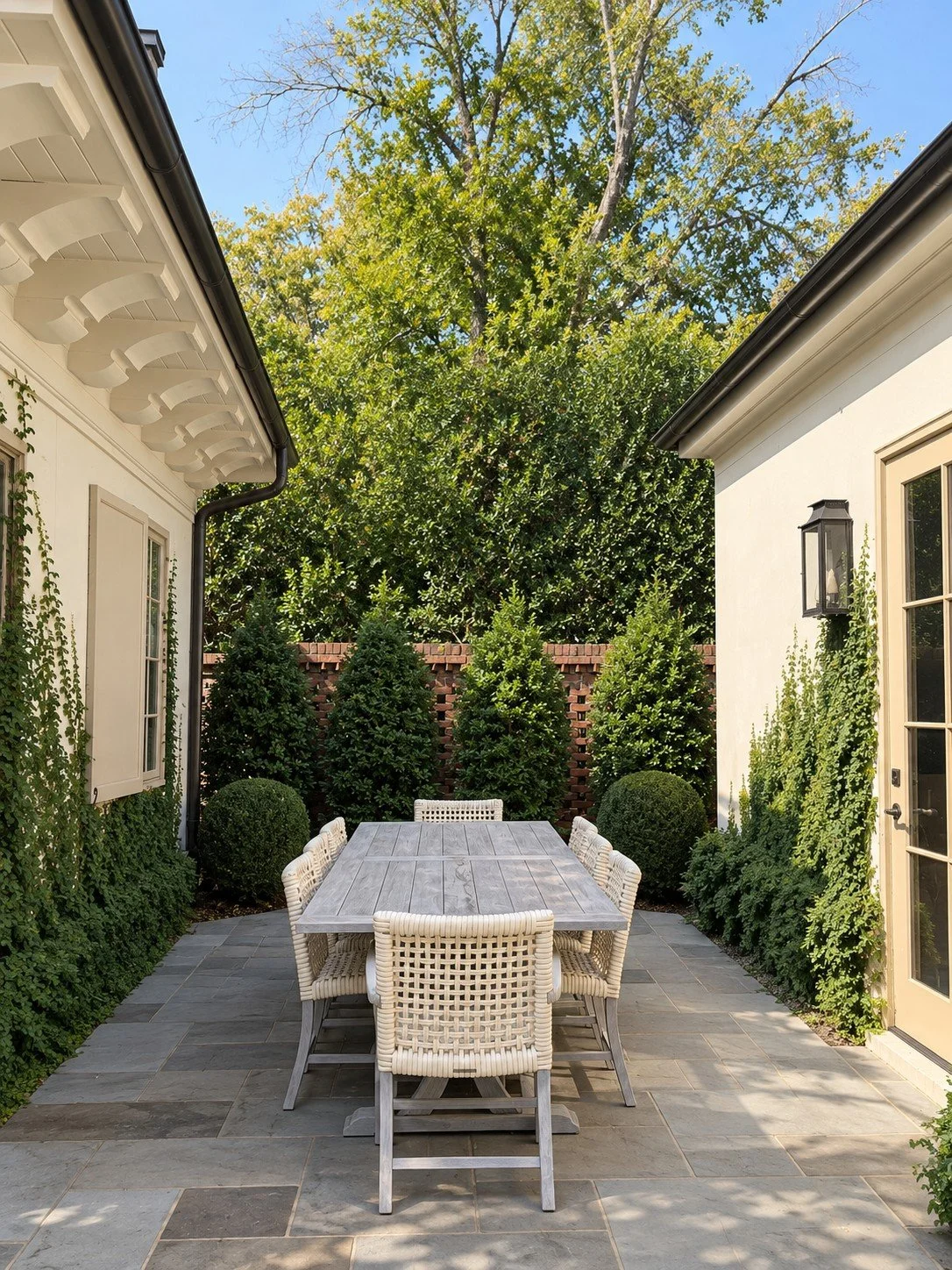
Creating a Cocoon:
An Intimate Garden Retreat
By shaping the landscape, framing the view, incorporating intimate lighting and layering natural materials, an open corner of the backyard became an intimate outdoor dining retreat—a place that feels tucked away, inviting and made for lingering.
The Vision
We wanted to create an outdoor dining space that felt like a room of its own—intimate and inviting, yet connected to the garden around it.
Inspired by the enclosed gardens and courtyards of Charleston, we saw an opportunity to transform the narrow space between two buildings into a place of sanctuary. Through layered greenery, carefully considered views and warm, atmospheric lighting, we envisioned an outdoor room that would feel sheltered, welcoming and distinctly its own—both day and night.
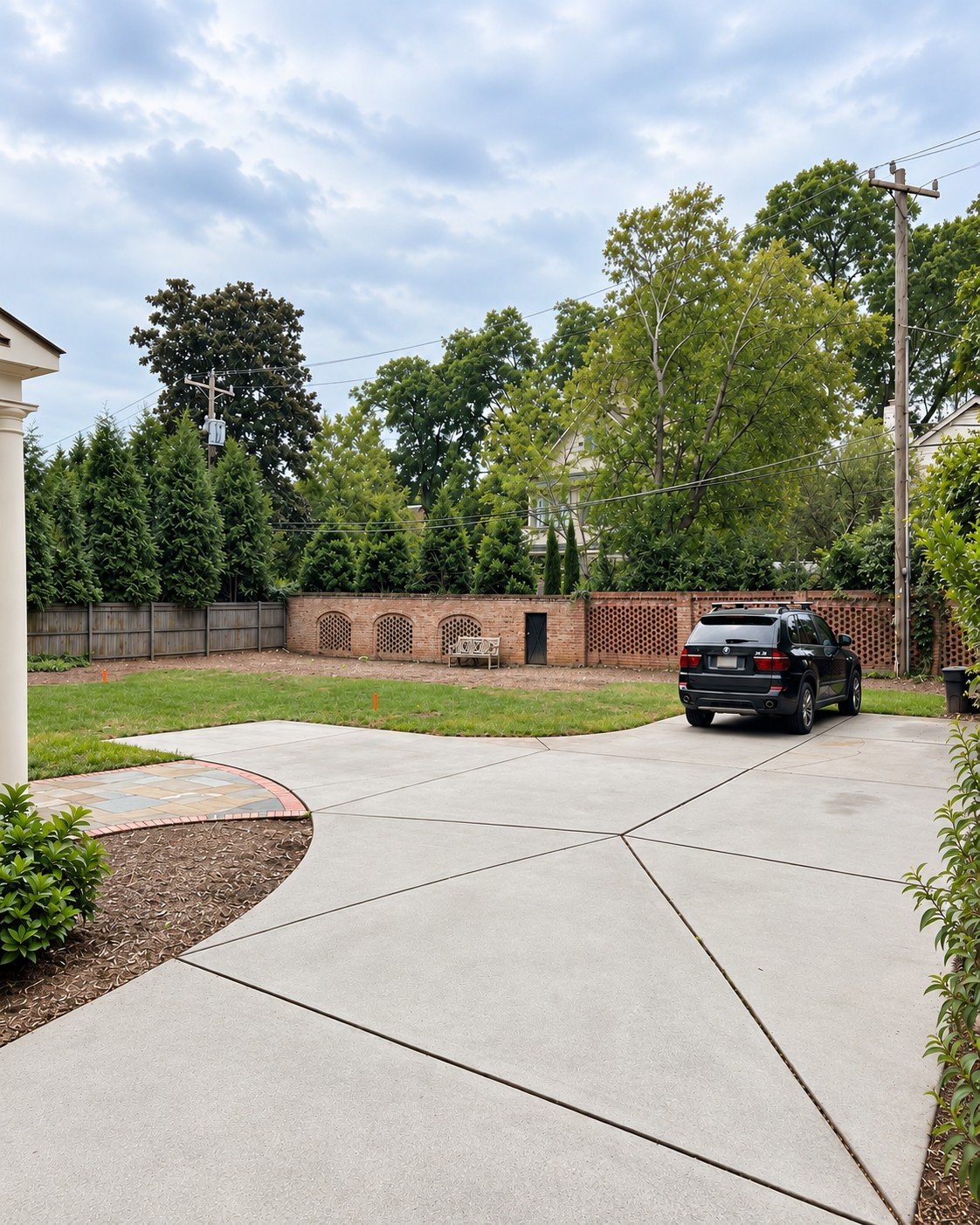
BEFORE | THE ORIGINAL LANDSCAPE

BEFORE | THE SPACE BETWEEN BUILDINGS
The Transformation
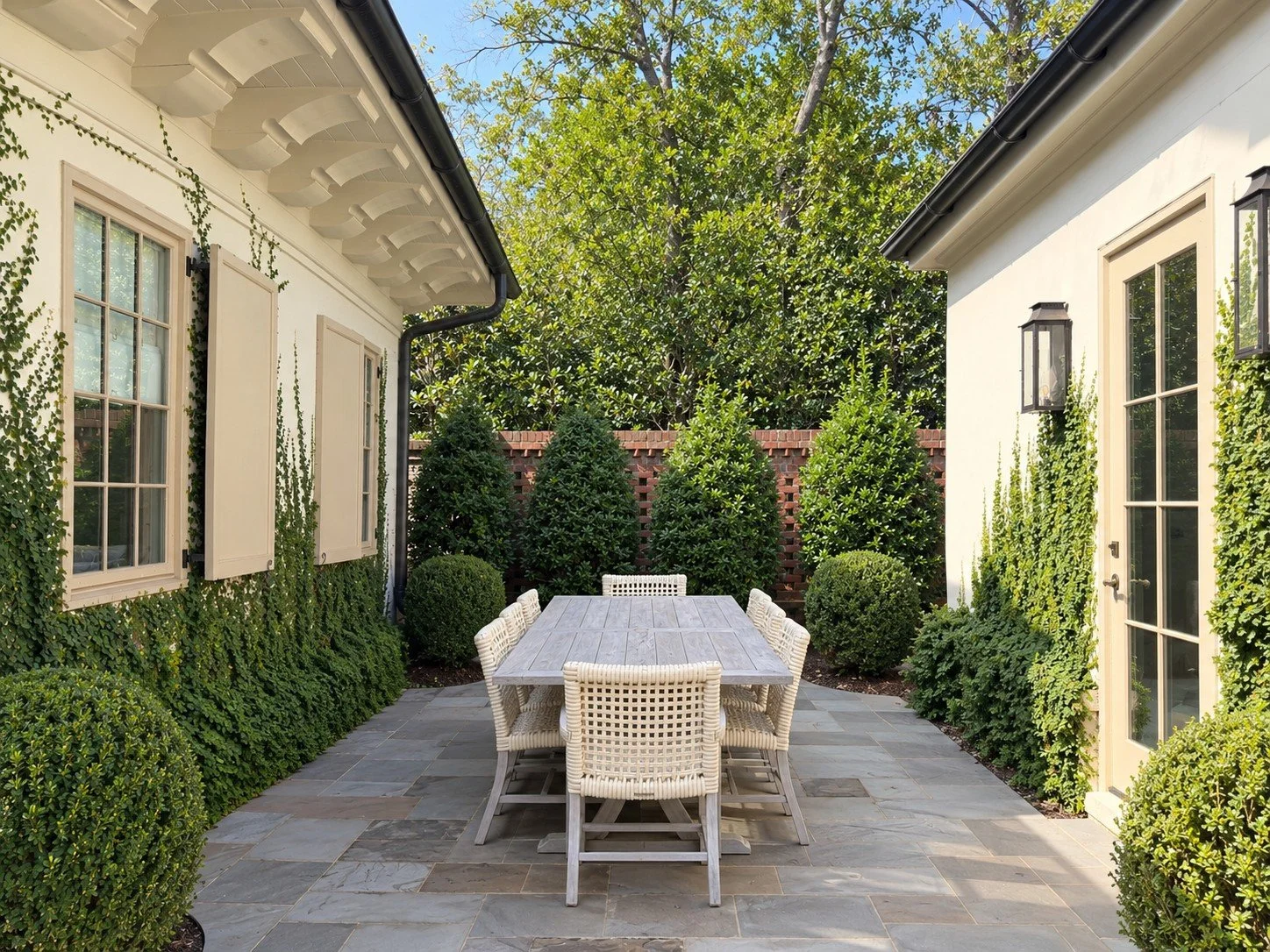
AFTER | AN OUTDOOR ROOM TAKES SHAPE
What began as an open stretch of yard gradually became an outdoor room. Plantings established a sense of enclosure, softened the architecture, and brought texture and life to the surrounding walls.
The dining table became the heart of the space, with greenery, lighting, and the existing architecture working together to create a feeling of intimacy.
The result is a retreat that feels connected to the garden, yet sheltered from the activity around it—a place to gather, linger and enjoy the everyday.
Design Details
The decisions that shaped the space and the feeling it creates.
Creating Enclosure
A garden doesn't need walls to feel like a room. Here, the surrounding architecture provides a natural sense of enclosure, while layered greenery softens the edges and creates intimacy.
Creeping fig vines, structured holley hedges and rounded boxwood bring different heights and textures together. Repetition creates rhythm, while the planting gives the dining area a sense of privacy and calm—a little sanctuary tucked between the buildings.
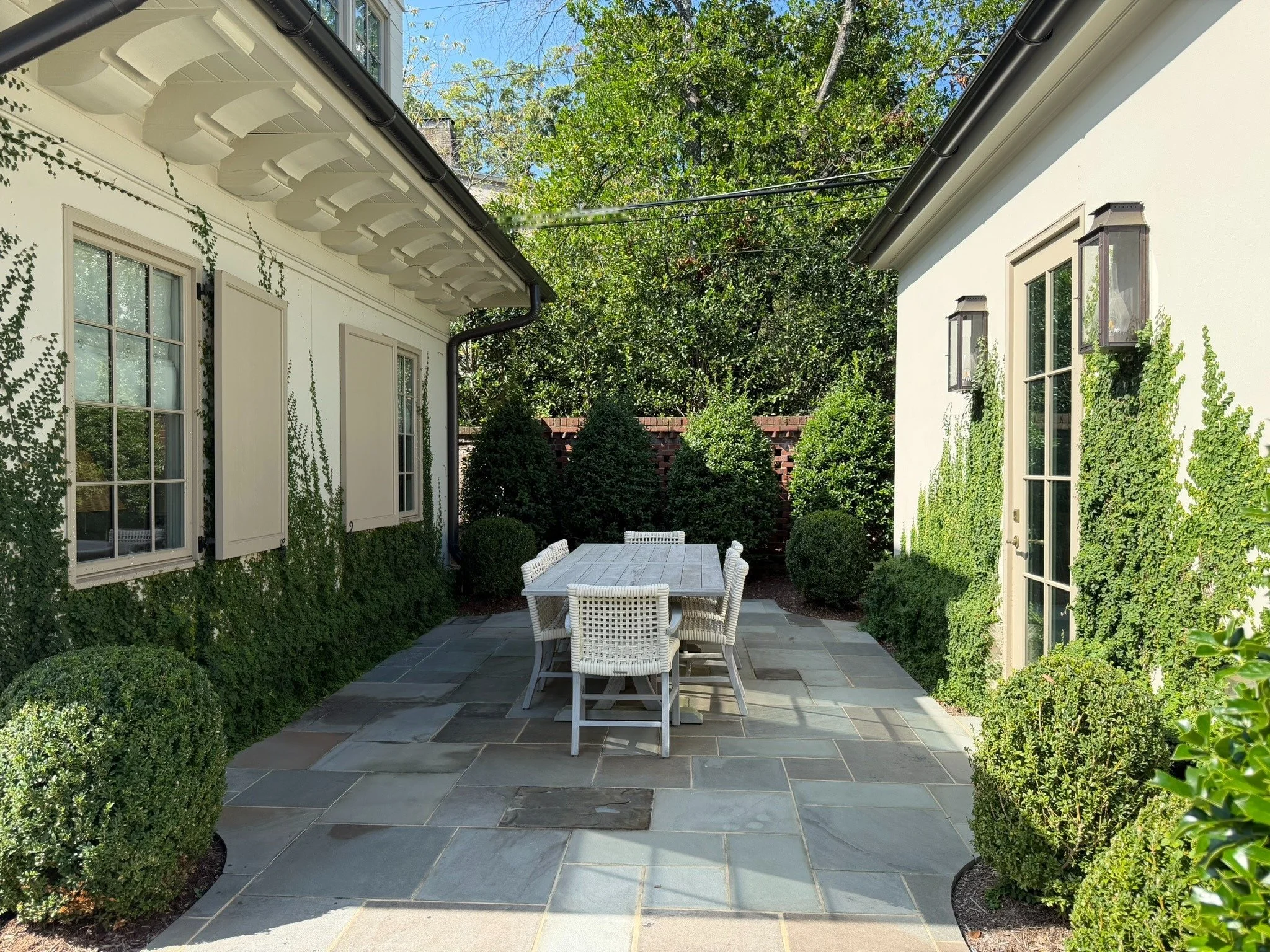
AFTER | HIDDEN BUT CONNECTED
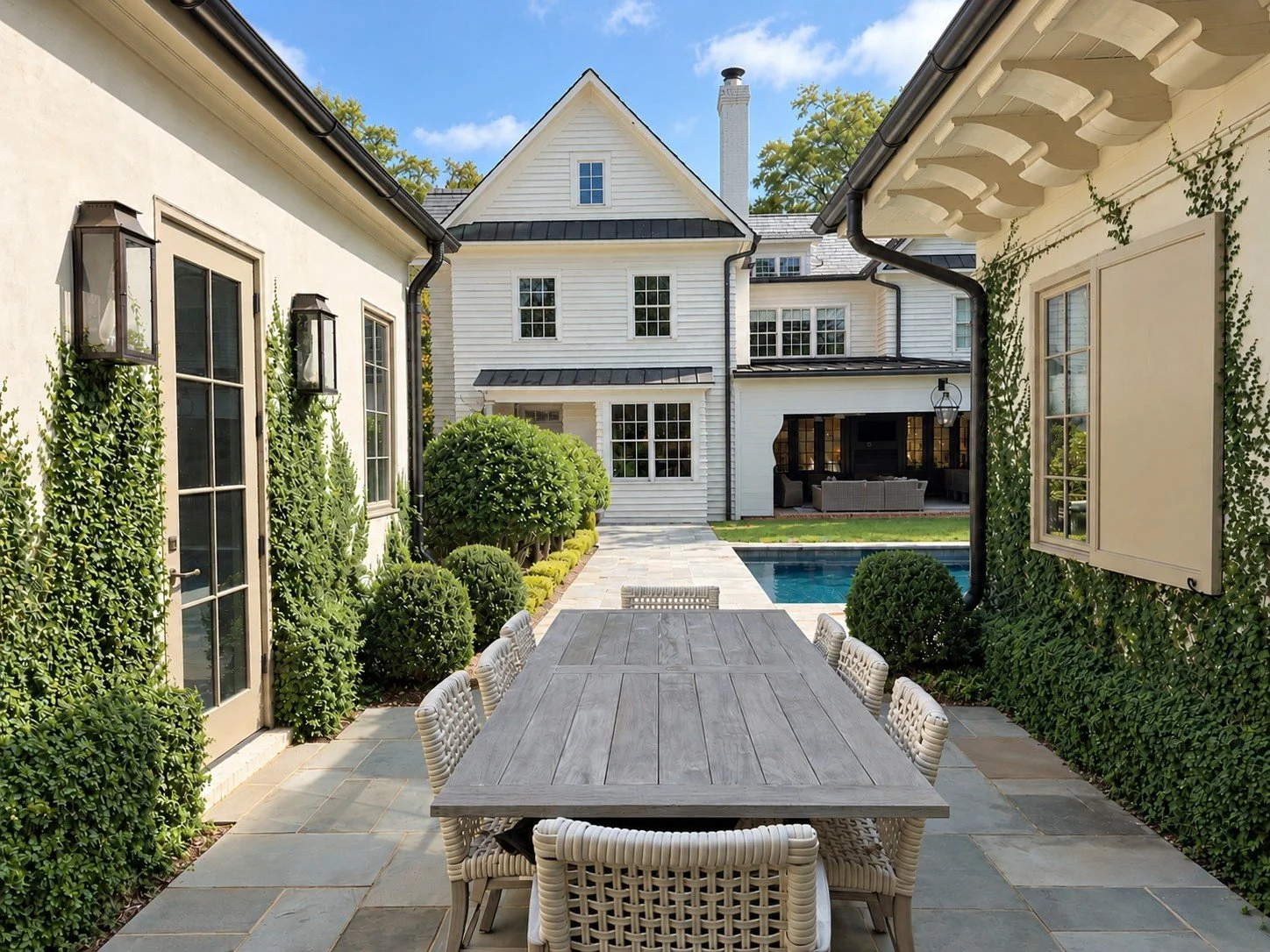
AFTER | A HIDDEN GEM
The Thinking Behind It: Use architecture and layered planting to create the feeling of a room outdoors. Vary heights and textures, repeat shapes, and soften the edges to create intimacy without walls.
A beautiful outdoor space should be considered from more than one perspective.
We thought about how this garden would look from the breakfast room long before anyone stepped outside. By carefully positioning the planting and creating a layered composition, we transformed an ordinary view into a moment of beauty—one that can be enjoyed from both inside and out.
Shaping the View

BEFORE | THE UNFINISHED VIEW
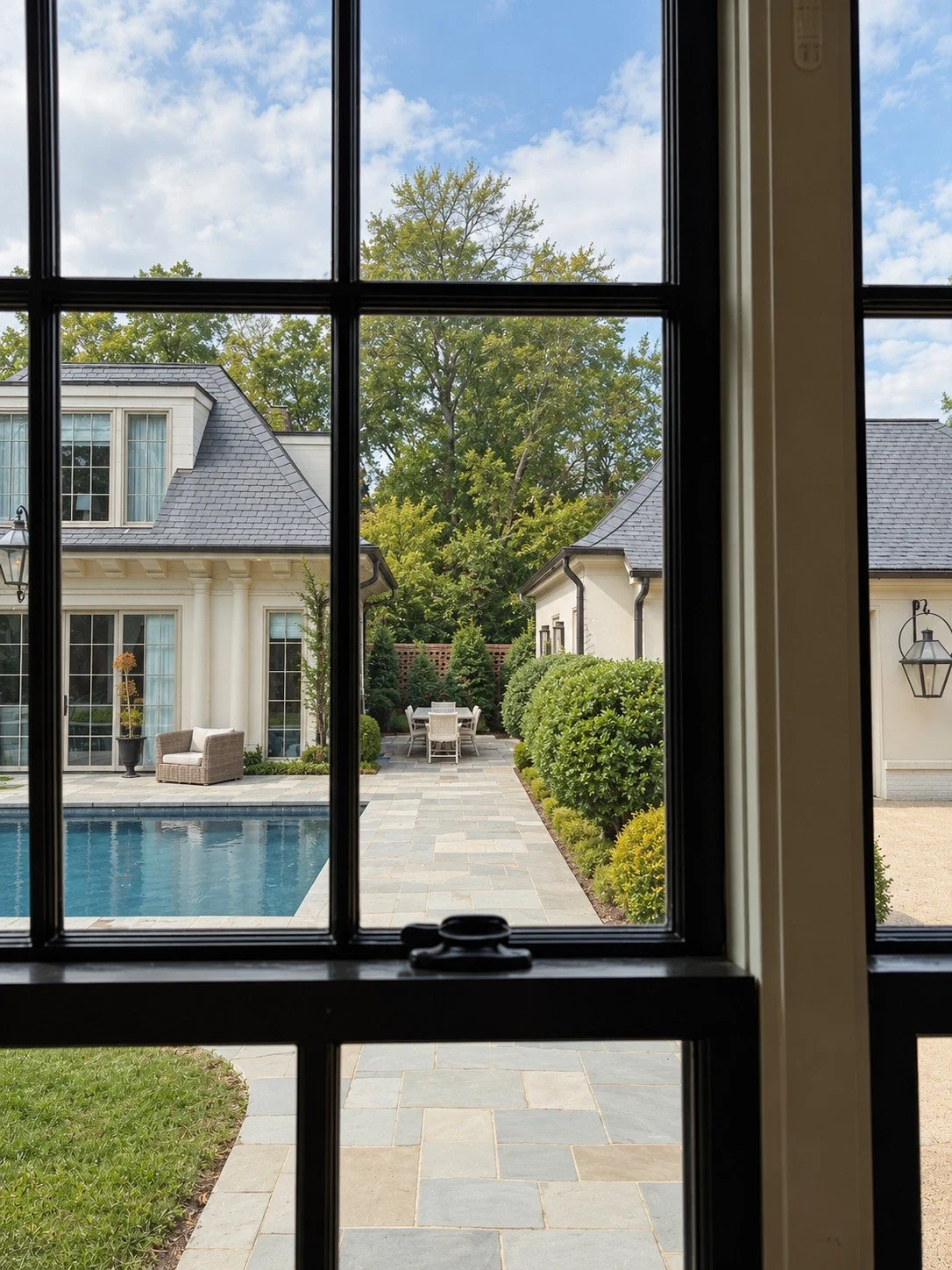
AFTER | A BEAUTIFUL SIGHTLINE
The Thinking Behind It: Consider what you see from inside as carefully as what you experience outside. Use alignment, framing, and thoughtful placement to turn an ordinary sightline into a beautiful moment.
Thoughtful placement can make the practical both convenient and beautiful. The grill sits close to both the kitchen and outdoor dining areas, making cooking and entertaining easy, yet remains tucked discreetly out of view. Everything is within reach, without interrupting the beauty of the gathering space.
Making the Practical Beautiful
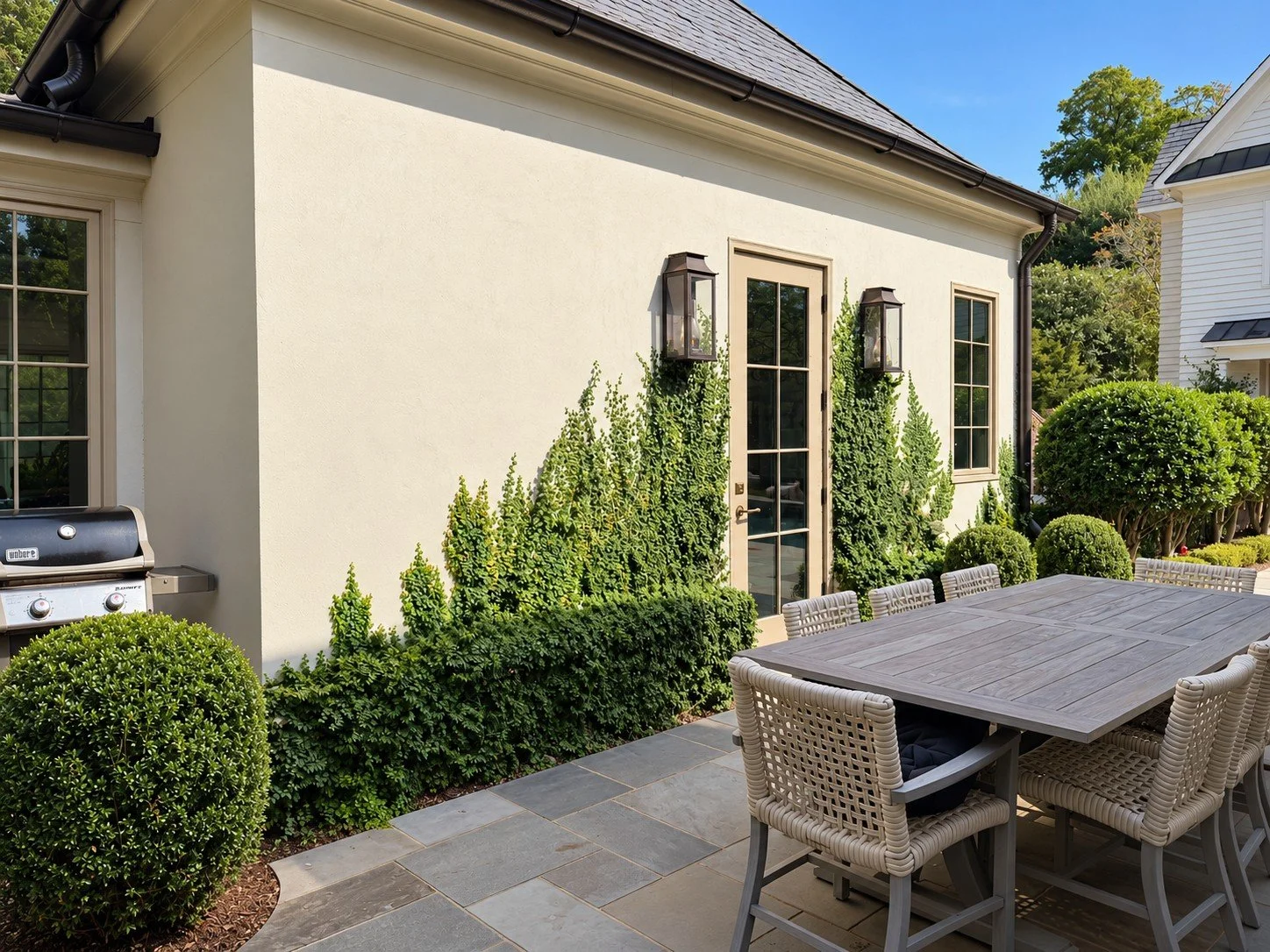
AFTER | BEAUTY WITHOUT SACRIFICING FUNCTION
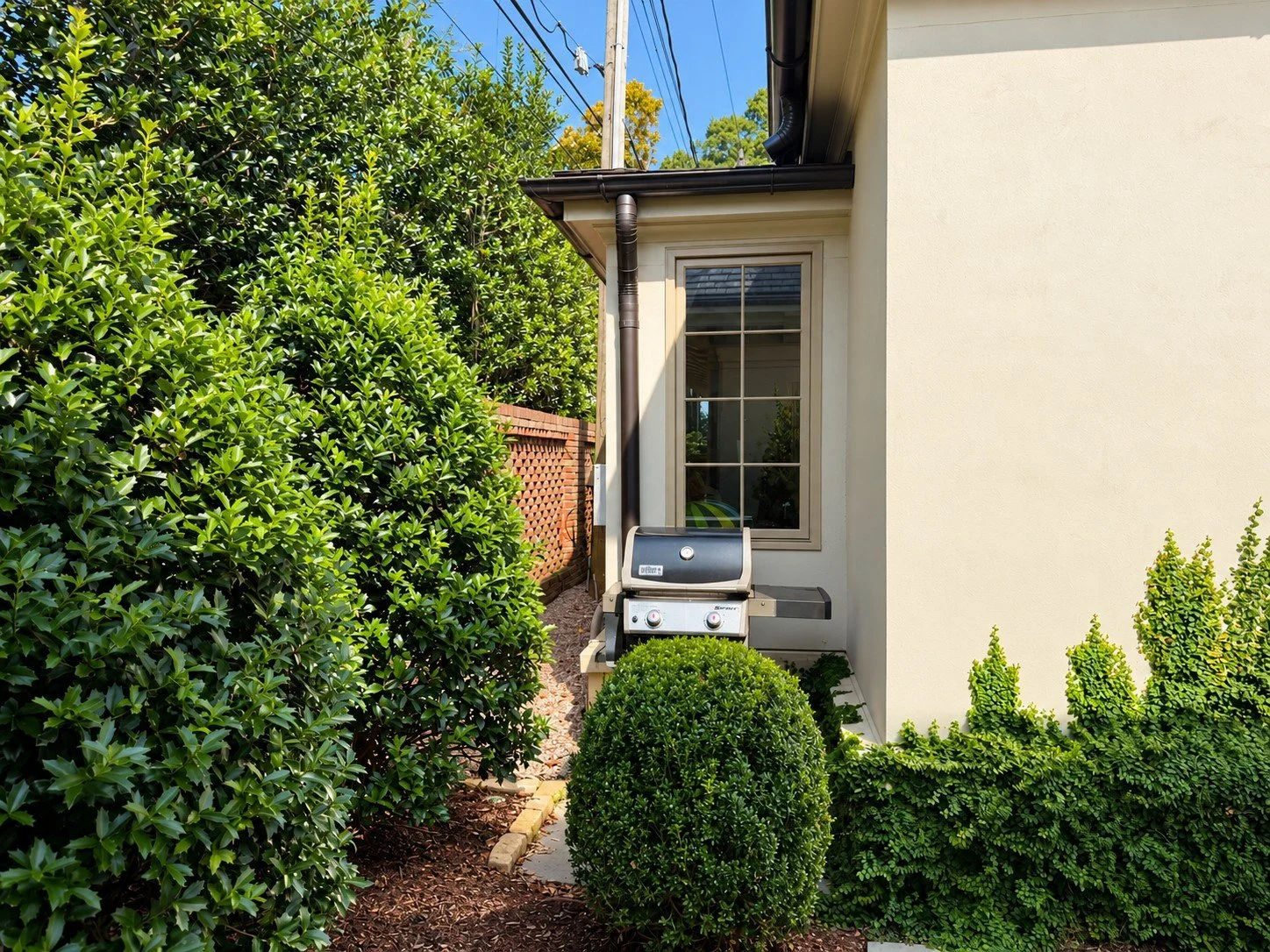
AFTER | HIDDEN YET CONVENIENT
The Thinking Behind It: Make practical necessities part of the design. Use thoughtful placement, creative screening, and layered planting to conceal what you don't want to see without sacrificing convenience or function.
As daylight fades, the courtyard takes on an entirely different feeling. Soft lighting woven through the trees creates a glowing backdrop, while small lamps bring warmth and intimacy to the table. The surrounding architecture and layered greenery create a sense of enclosure, transforming a simple dinner outdoors into an experience that invites everyone to linger.
It's a reminder that designing an outdoor space isn't only about how it looks during the day, but how it feels—and how it invites us to use it—long after the sun goes down.
Designing for a Feeling
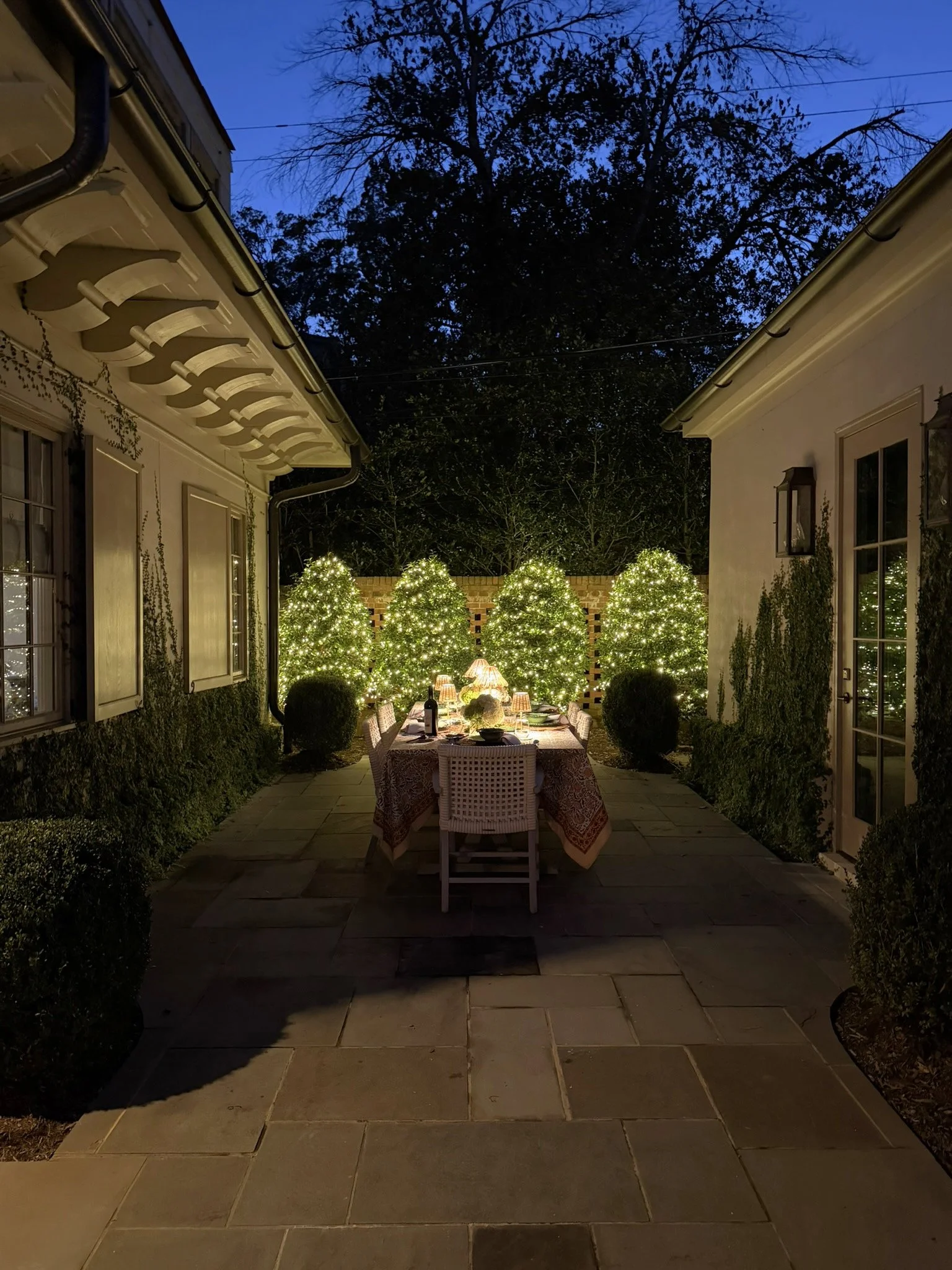
The Thinking Behind It: Design for all the senses. Layer lighting to create warmth and depth, consider the sounds and scents of the garden, and use texture and enclosure to create an atmosphere that invites people to linger.